
Top Emergency HVAC Services in Phoenix, AZ, 85001 | Compare & Call

Semper Fi Heating & Cooling
Semper Fi Heating & Cooling is a trusted, locally-owned HVAC and plumbing service provider in Phoenix, AZ. We specialize in comprehensive heating, cooling, and plumbing solutions designed for the uniq...
Hilliker and Sons is a licensed, bonded, and insured family-owned HVAC company serving Phoenix homeowners. Specializing in installation, maintenance, and repair, they focus on building personal connec...
1st Choice Mechanical
1st Choice Mechanical is a family-owned HVAC, plumbing, and insulation company serving Phoenix, AZ, and surrounding areas. With over 20 years of combined experience, we specialize in comprehensive hea...
Ideal Air Conditioning and Insulation
Ideal Air Conditioning and Insulation is a Phoenix-based HVAC and home performance contractor co-owned by Alex and Elena, both ASU Design Studies graduates with a focus on the built environment. Alex ...
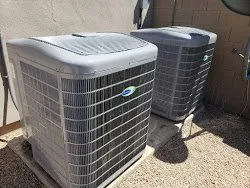
Cool Zone Air Conditioning & Heating is a family-owned HVAC company that has been serving the Phoenix Metro area since 2006. Founded on principles of integrity and customer-first service, they special...
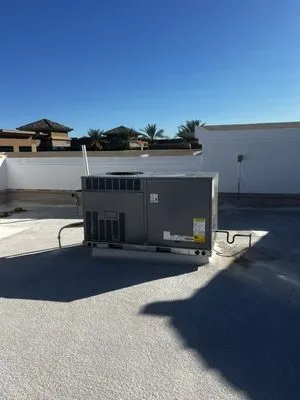
Anello AC was founded in Phoenix in 2023 with a straightforward goal: to deliver the reliable, high-quality HVAC service our community deserves. Born from over 20 years of hands-on experience, we buil...

Gladiate Air Conditioning & Heating
Gladiate Air Conditioning & Heating is a locally owned and operated HVAC service provider dedicated to the Phoenix community since 2015. We deliver reliable heating and cooling solutions for both resi...
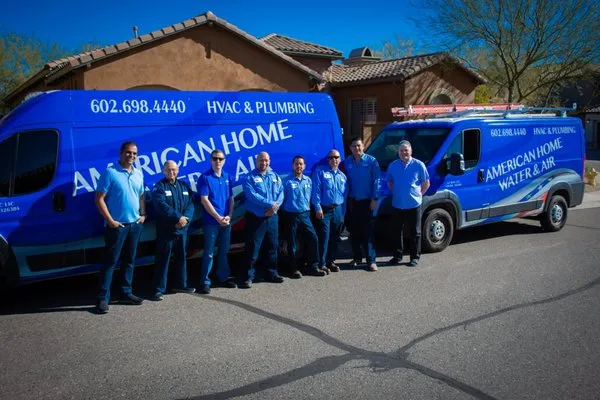
American Home Water & Air
American Home Water & Air is a trusted Phoenix-based HVAC and plumbing company founded in 1985 by childhood friends Thomas Knapp and Thomas Atkinson. With over 35 years of experience, they provide com...

Mountainside Air is a veteran-owned HVAC company serving Phoenix, AZ since 2018. Founded by a U.S. Air Force veteran who grew up in Phoenix, the business brings over 15 years of hands-on experience an...
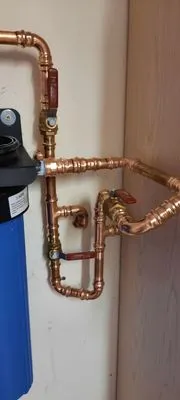
Parker & Sons
Parker & Sons began in 1974 with Jack and Faye Parker using their family wagon to serve Phoenix, building a business on a handshake and unwavering trust. Today, as one of Arizona's oldest and largest ...
Q&A
Should I switch from my gas furnace to a heat pump in Phoenix?
Given Phoenix's mild winters, with lows rarely dipping below freezing, a modern cold-climate heat pump is a technically sound replacement for a gas furnace. The economics are strengthened by the IRA rebates. It's important to size the heat pump for cooling dominance. To maximize savings, pair it with a smart thermostat to avoid operation during utility peak hours from 4 PM to 7 PM, when electricity rates are highest, ensuring the system precools your home efficiently.
Can my home's ductwork handle better air filters for our ozone and pollen?
Phoenix's ozone risk and March pollen peak make high-grade filtration valuable. Many local homes have duct board, a fibrous material that can restrict airflow if paired with a filter that's too dense. Upgrading to a MERV-13 filter requires a static pressure test; if pressure is too high, it can reduce cooling capacity and strain the blower motor. A technician can assess your specific system and may recommend modifying the filter cabinet or selecting a lower-MERV, high-performance filter to balance air quality and system health.
Why does my AC struggle when it's over 111°F outside?
Residential air conditioners in Phoenix are typically designed to maintain indoor comfort up to an outdoor temperature of 111°F. When ambient temperatures exceed this design limit, the system's capacity to reject heat diminishes, and the delta T (temperature drop across the coil) decreases. Modern systems using R-454B refrigerant maintain slightly better performance at these extreme temperatures compared to older refrigerants, but all systems will run longer and have reduced output during the hottest parts of our summers.
What are the permit and safety requirements for a new AC installation?
All HVAC replacements in Phoenix require a permit from the City of Phoenix Planning and Development Department. As of 2026, most new systems use A2L refrigerants like R-454B, which are mildly flammable. This mandates compliance with updated safety standards, including specific leak detection and ignition source clearance requirements that installers must follow. The permitting process ensures the installation meets current building and mechanical codes, which is crucial for system safety, performance, and to validate any utility or federal rebate applications.
How does my system's age affect its performance here in Phoenix?
The average Phoenix home was built around 1984, meaning many original systems are now over 40 years old. In our arid heat, the most common failure is the capacitor, a part that helps start the compressor. Extreme, prolonged heat degrades this component faster, and its failure rate accelerates significantly in older units. This age also means your system likely uses outdated R-22 refrigerant, which is no longer manufactured and is far less efficient than today's standards.
My AC just quit on a 110°F day in Uptown—how fast can a technician get here?
A technician can typically be at your Uptown home in 15-25 minutes. Our dispatch uses I-17 as the main artery, routing from our central location near the Phoenix Art Museum directly to your neighborhood. For a no-cool emergency, we prioritize diagnostics for the capacitor and contactor, the two most frequent heat-related failures. Having clear access to your outdoor unit will help expedite the repair once we arrive.
Is now a good time to upgrade my AC for better efficiency?
The current federal minimum efficiency standard is 15.2 SEER2, a significant jump from older units. With Phoenix's average electricity rate at 14 cents per kWh, a modern high-SEER2 system can reduce your cooling costs substantially. The active Inflation Reduction Act rebates, with caps up to $8,000 for qualified heat pump installations, directly offset the higher upfront cost of these efficient systems, improving the overall return on investment.
My Ecobee thermostat is showing an E164 alert. What does that mean?
An Ecobee E164 code specifically indicates the thermostat has lost communication with an external sensor or equipment module. In Phoenix, this often points to a wiring issue exacerbated by heat in the attic or at the air handler. It can also signal a failing control board. This alert doesn't necessarily mean a complete system failure, but it disables smart recovery and optimal staging. A technician will trace the communication wiring and check connections at both the thermostat and the indoor unit to restore full functionality.
