
Top Emergency HVAC Services in Wickenburg, AZ, 85358 | Compare & Call

Since 1980, Brooks Air Conditioning has been a trusted local presence in Wickenburg, starting with Art Brooks, a single truck, and a commitment to neighborly service. After graduating from refrigerati...

Air Advantage Heating & Cooling
For over 22 years, Air Advantage Heating & Cooling has been the trusted HVAC provider for Central and Southwest Arizona, with deep roots in Wickenburg. Founded and operated by Mike Balowski, the compa...
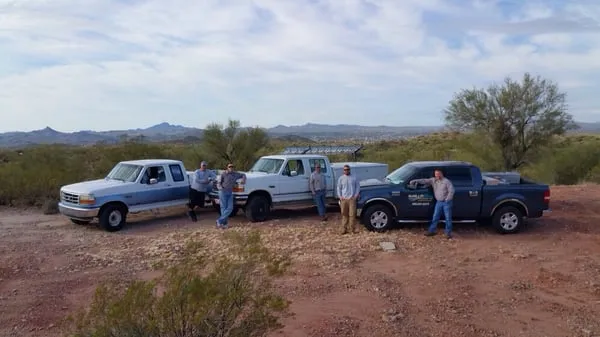
Since 1948, Mcmillin Air has been the trusted, family-owned HVAC partner for Wickenburg and its surrounding communities. With decades of experience under our belt, we specialize in comprehensive heati...
Sheridan's Heating & Cooling has been serving Wickenburg's heating and cooling needs for many years. We specialize in HVAC installation, replacement, and repair for both residential and commercial sys...

Excel Sheet Metal & A/C is a family-owned and operated HVAC business deeply rooted in the Wickenburg community. Founded in the early 1980s, the company has been serving residents and businesses in Wic...
Rural Refrigeration is Wickenburg's trusted local expert for appliance and HVAC repair, specializing in the cooling challenges unique to our desert climate. We understand the frustration of refrigeran...
Arizona Valley Heating and Cooling
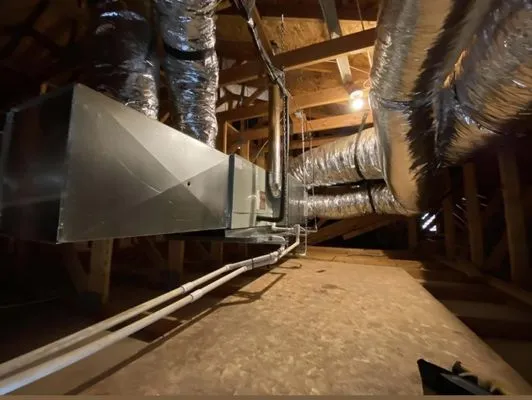
Arizona Valley Heating and Cooling is a family-owned HVAC company serving Wickenburg and the Phoenix area since 2022. We specialize in HVAC installation, repair, and maintenance, offering same-day ser...
Houser Larry Heating & Cooling
Houser Larry Heating & Cooling is a trusted HVAC company serving Wickenburg, AZ, with reliable heating and cooling solutions. We understand the unique challenges local homeowners face, including frequ...
FAQs
I've heard about new efficiency rules. What's the SEER2 requirement now, and do the new rebates make an upgrade worthwhile?
As of 2026, the federal minimum efficiency standard for new AC units in Arizona is 14.3 SEER2. Modern systems significantly exceed this, often reaching 18-20 SEER2. At the local APS rate of $0.14 per kWh, the operational savings are clear. The Inflation Reduction Act's HEEHRA rebates, with a cap of $8,000 for qualified heat pump installations, directly offset the higher upfront cost of high-efficiency equipment, making the payback period for a Wickenburg homeowner very attractive.
Why does my AC seem to struggle on the very hottest days we get?
HVAC systems are engineered to a specific design temperature, which for Wickenburg is 109°F. When ambient temperatures meet or exceed this limit, the system's capacity to reject heat diminishes, and the temperature difference (delta T) it can achieve narrows. It's working at maximum capacity. The newer R-454B refrigerant standard for 2026 offers slightly better high-temperature performance and lower global warming potential than older refrigerants, but all systems have a thermodynamic limit during peak heat events.
With our dust and spring pollen, can my home's ductwork handle a better air filter?
Addressing dust particulates and April pollen peaks requires a filter rated MERV 13 or higher. However, many Wickenburg homes from the 1980s use ductboard, a fibrous material that can restrict airflow. Installing a high-MERV filter in an existing ductboard system often creates excessive static pressure, reducing airflow and cooling capacity. A proper assessment should measure your system's static pressure to determine if duct modifications or a specialized media cabinet are needed to achieve clean air without sacrificing performance.
If my AC quits on a hot day near Coffin Ranch Park, how quickly can a technician realistically get here?
A technician can typically dispatch from our local office to the Downtown Wickenburg area within 5 to 10 minutes. Our routing uses US-60 for direct access, avoiding unnecessary delays through town. For a 'no-cool' emergency, we prioritize same-day service, especially during peak cooling season, to prevent indoor temperatures from rising rapidly and to diagnose critical failures like a blown capacitor or refrigerant loss.
My Ecobee thermostat is showing an 'E1' alert. What does that mean for my system?
An Ecobee E1 alert indicates the thermostat has lost communication with the HVAC equipment. In Wickenburg, this is frequently caused by a safety lockout on the outdoor unit due to a fault, such as a high-pressure switch trip from extreme heat or a failed capacitor. The thermostat can't get a status signal. It's a diagnostic prompt to check the outdoor unit's condition and error lights before a complete system shutdown occurs, allowing for proactive repair during our demanding cooling season.
What are the permit and safety requirements for installing a new AC with the latest refrigerant?
All HVAC replacements in Wickenburg require a permit from the Town of Wickenburg Building Department. Since 2026, new systems predominantly use A2L refrigerants like R-454B, which are mildly flammable. This mandates compliance with updated safety codes (like the IECC and NFPA 70) that require specific leak detectors, updated electrical clearances, and revised piping practices. Only EPA-certified technicians trained in A2L handling should perform the installation to ensure it meets these critical safety and regulatory standards.
Given our mild winters and high electric rates, does switching from my electric furnace to a heat pump make sense here?
For Wickenburg, a heat pump is a highly efficient year-round solution. Our winter lows are well within the effective heating range of modern cold-climate heat pumps. Since your primary fuel is already electricity, the heat pump provides both cooling and heating at a fraction of the cost of standard electric resistance heat. Strategic use can avoid operating during APS peak hours (4 PM to 7 PM) when rates are highest, maximizing savings. The HEEHRA rebates make this transition even more cost-effective.
My Wickenburg home's air conditioner is about as old as the house. What typically goes wrong at this age?
Homes built around the 1986 average are often operating on original or 20+ year-old HVAC equipment. The primary failure point for these aged units in our climate is the capacitor, a component that helps start the compressor and fan motors. The extreme thermal cycling from our 109°F design days degrades this part faster. An old system struggling against the heat places repeated, high electrical stress on the capacitor, leading to a common 'hard start' or complete failure to turn on.
