
Top Emergency HVAC Services in Ladera Heights, CA, 90008 | Compare & Call

There are 238 hvac companies server in Ladera Heights CA
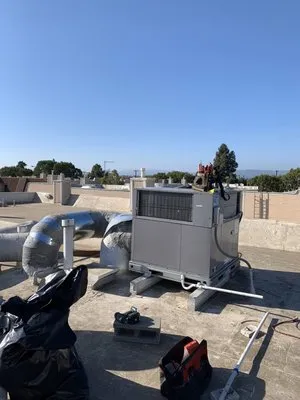
Westside HVAC Pros is a trusted, locally-owned HVAC contractor serving Los Angeles, CA. We specialize in comprehensive heating and cooling solutions, including expert installation, reliable repair, an...
Effin Wright - Heating and Air
Effin Wright - Heating and Air provides reliable HVAC and water heater services to Los Angeles homeowners. With 28 years of experience in the AC industry, we specialize in everything from comprehensiv...

Top Energy Solutions
Top Energy Solutions has been a trusted family-owned and operated provider for Los Angeles homeowners since 2007. With over 20 years of industry experience, founder Leor leads a team of fully certifie...
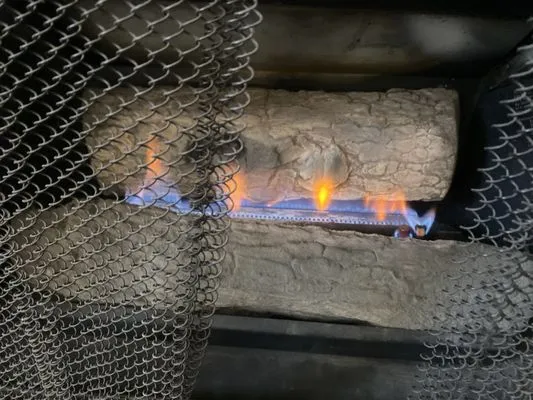
ASAP Repairs and Recovery Services
For over a decade, ASAP Repairs and Recovery Services has been a trusted, licensed, and bonded provider for the Greater Los Angeles area. We specialize in bringing homes and businesses back to comfort...
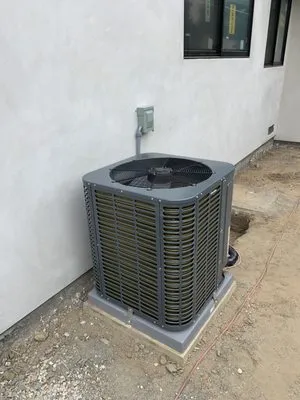
Nexus Heating & Air was founded in North Hollywood by experienced HVAC professionals who saw a need for honest, reliable service in the industry. Frustrated with common practices of cutting corners an...
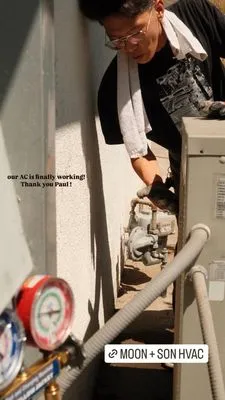
Moon & Son HVAC is a trusted, family-owned heating and air conditioning service provider serving Long Beach and the surrounding communities. For years, we've helped local homeowners and businesses mai...
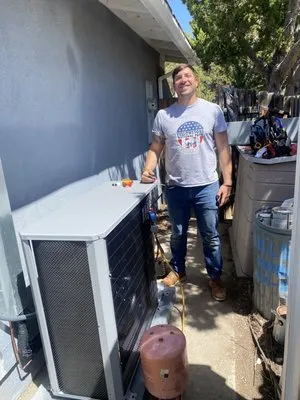
Dave's Heating & Air Conditioning is a family-run HVAC company serving Calabasas and the surrounding valleys since 1980. Founded by David Blonsky, a hands-on owner and operator who earned his license ...

Lions Heating & Air Conditioning
I'm Leo N., the owner and operator of Lions Heating & Air Conditioning here in Culver City. After seven years in the field, I founded this company on a promise to uphold my core values of honesty, int...
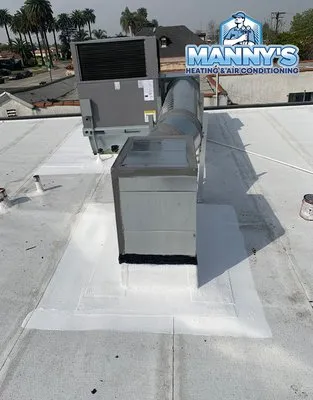
Manny's Heating & Air Conditioning is a family-owned, licensed, and bonded HVAC provider proudly serving Los Angeles since 2008. Founded by husband-and-wife team Manny and Jessica Saavedra, the compan...
As the founders and heart of Pioneers Heating and Air, we began with a simple mission: to bring reliable comfort and healthier air to our neighbors in Pasadena and the San Gabriel Valley. What started...
Estimated HVAC Service Costs in Ladera Heights, CA
Frequently Asked Questions
How do 2026 SEER2 standards affect my electricity bill?
California's 15.2 SEER2 minimum represents a 12% efficiency improvement over previous standards. At Ladera Heights' $0.36/kWh rate, upgrading from a 10 SEER system saves approximately $450 annually on cooling costs. The Inflation Reduction Act provides up to $8,000 in HEEHRA rebates for qualifying high-efficiency installations. This combination reduces payback periods to 3-5 years for most homeowners.
Should I switch from gas heat to a heat pump in Ladera Heights?
Heat pumps provide efficient heating down to 25°F, covering 95% of Ladera Heights winter conditions. During 16:00-21:00 peak rate periods, heat pumps operate at 250-300% efficiency versus gas furnaces at 80-95%. The HEEHRA rebate covers dual-fuel systems that maintain gas backup for rare sub-25°F events. This hybrid approach optimizes for both efficiency and reliability in our climate.
What permits are required for R-454B installations in 2026?
The Los Angeles County Department of Public Works Building and Safety Division requires permits for all refrigerant system installations. 2026 A2L safety standards mandate leak detection systems, emergency ventilation, and technician certification for R-454B handling. These mildly flammable refrigerants require specific clearance distances from ignition sources. Proper documentation ensures compliance with both local codes and federal environmental regulations.
Can my existing ductwork handle wildfire smoke filtration?
Flexible fiberglass insulated ducts in Ladera Heights homes typically support MERV-13 filters without static pressure issues when properly sized. This filtration level captures 85% of PM2.5 particles from wildfire smoke and 90% of April pollen peaks. However, older duct systems may require airflow testing before upgrading filtration. Properly installed MERV-13 filters reduce indoor particulate concentrations by 50-60% during smoke events.
What does an Ecobee E1 alert mean for my Ladera Heights system?
An Ecobee E1 code indicates refrigerant pressure exceeding safe operating limits, often triggered during Ladera Heights' hottest afternoon periods. This alert typically precedes compressor shutdown by 15-30 minutes, allowing preventive action. Common causes include condenser coil blockage from debris accumulation or refrigerant overcharge. Immediate response prevents permanent compressor damage and maintains system longevity.
What if my AC fails during a Ladera Heights heatwave?
Emergency no-cool calls receive priority dispatch from technicians stationed near Kenneth Hahn State Recreation Area. These locations provide direct I-405 access to Ladera Heights neighborhoods. A service vehicle can typically reach your home within 15-25 minutes during normal traffic conditions. Technicians carry diagnostic tools and common replacement parts to address immediate cooling restoration.
Why does my AC struggle when temperatures exceed 85°F?
Ladera Heights HVAC systems are engineered for 85°F design temperatures, but summer peaks frequently reach 95°F+. This 10+ degree delta creates a 30-40% capacity deficit as systems operate beyond their design envelope. R-454B refrigerant maintains better pressure-temperature relationships in extreme heat compared to older R-410A, but still experiences efficiency degradation above 95°F. Proper sizing accounts for these thermal load variations.
Why do Ladera Heights AC units from the 1960s often fail at the condenser coil?
HVAC systems in Ladera Heights average 64 years old, dating to 1962 construction. This age exceeds the 15-20 year service life of most residential equipment. Older condenser coils develop micro-fractures from thermal cycling, which accelerates salt-air corrosion from Pacific Ocean aerosols carried inland. The combination of material fatigue and environmental exposure creates the most common failure point for these vintage systems.
