
Top Emergency HVAC Services in Loomis, CA, 95650 | Compare & Call


Gold River Mechanical is a family-owned and operated HVAC service provider serving Loomis, CA, and the greater Sacramento region since 1987. Founded and led by Rusty Fratis, whose 30 years of hands-on...
American Energy Heat & Air has been a trusted, family-owned HVAC provider in Loomis and the greater Sacramento area since 1981. We're committed to serving our neighbors with reliable heating and cooli...
South Placer Heating and Air has been a trusted local HVAC expert in Loomis and the surrounding Sacramento region since 2009. We are dedicated to providing fast, reliable service for all your heating ...
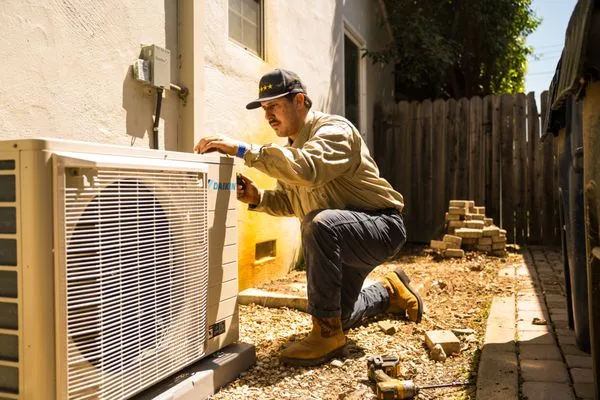
Lee's Air, Plumbing, & Heating
Lee's Air, Plumbing, & Heating has been a trusted provider of HVAC and plumbing services in Loomis and surrounding areas since 1981. Founded by Phil Lee and his son Bryan as a commercial air condition...
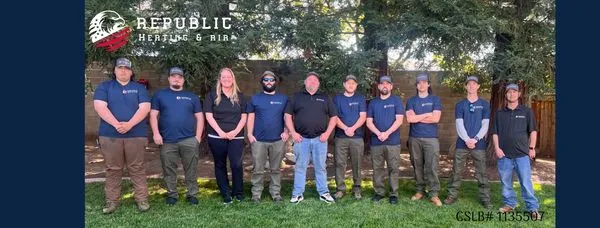
Republic Heating & Air is your trusted local HVAC expert serving Loomis, CA, and the surrounding communities. We specialize in comprehensive heating and air conditioning solutions, including professio...
Mosburg Heating & Air has been providing reliable heating and air conditioning services to the Loomis community and surrounding Sacramento/Placer region since 1990. With decades of combined experience...
A & P Heating & Cooling
Since 1963, A & P Heating & Cooling has been a trusted partner for home comfort in Loomis and the East Sacramento area. We are honored to carry forward the legacy of founder Larry Gunst, who establish...
For over 20 years, Alta Heating & Air Conditioning has been the trusted HVAC specialist for Loomis and the greater Sacramento area. As a certified company, we focus on solving heating and air conditio...
Crystal Blue Plumbing, Heating & Air
Crystal Blue Plumbing, Heating & Air is a family-owned and operated HVAC and plumbing contractor that has served Sacramento, CA and surrounding communities like Loomis for over 40 years. We treat our ...
Residential Air is a trusted heating and air conditioning company serving Loomis, CA, and the surrounding areas. We specialize in HVAC installation, replacement, and repair, focusing on solutions tail...
Frequently Asked Questions
My Ecobee thermostat is showing an 'E1' alert. What does that mean?
An Ecobee E1 alert indicates the thermostat is not detecting a call for cooling or heating from the HVAC equipment. In Loomis, this often points to a control voltage issue, such as a blown 3-5 amp fuse in the air handler or a failed float switch due to a clogged condensate drain. It can also signal a compromised safety circuit from a tripped high-pressure switch, which is common during capacitor failure in extreme heat. This alert allows for targeted diagnostics before a complete system shutdown occurs.
Our air conditioner stopped on the hottest day. How fast can a technician get here?
For a no-cool emergency in Downtown Loomis, dispatch from our service hub near the Loomis Depot allows for a 5 to 10 minute response time. We monitor major routes like I-80 for real-time traffic to ensure prompt arrival. The priority is to secure basic cooling or identify a critical safety issue, such as a failed capacitor, to protect the compressor from damage in the extreme heat.
What does the new SEER2 rating mean for my electricity bill?
As of 2026, federal law mandates a minimum 14.3 SEER2 for new central air conditioners in California. Upgrading from an older, 8-10 SEER unit to a modern 18+ SEER2 system can cut cooling energy use by nearly half. With PG&E rates at $0.38 per kWh, the annual savings are significant. The federal HEEHRA rebate, with a cap of $8,000 for qualified heat pumps, directly reduces the upgrade cost and improves the payback period.
Why does my air conditioner struggle when it's over 100 degrees?
HVAC systems in Loomis are typically designed for a 98°F outdoor temperature. When actual temperatures exceed this design limit, the system's capacity drops and it runs continuously, struggling to maintain a setpoint. The new standard R-454B refrigerant performs better in these high-ambient conditions compared to older R-410A, offering slightly higher capacity and efficiency when you need it most. Proper sizing via a Manual J load calculation is key to minimizing this performance gap.
Is switching from my gas furnace to a heat pump a good idea here?
For Loomis, with winter lows that rarely see extended freezing, a cold-climate heat pump is a viable primary heating source. It provides efficient cooling and heating in one system. The economic case is strengthened by avoiding PG&E's peak electricity rates from 4 PM to 9 PM through strategic thermostat programming and leveraging the substantial HEEHRA rebates. The switch from gas heat also improves indoor air quality by eliminating combustion byproducts from the home.
Can my current ducts handle a filter that protects against wildfire smoke and spring pollen?
Wildfire PM2.5 and April pollen peaks make advanced filtration critical. While a MERV-13 filter is recommended for capturing these particles, your existing flexible insulated ducting may create static pressure issues if the system isn't designed for it. A technician must measure external static pressure and assess blower capacity; often, a 4-5 inch media cabinet is added to provide high filtration without restricting airflow, which is essential for both air quality and equipment longevity.
What are the permit and safety requirements for a new AC installation?
All HVAC replacements in Loomis require a permit from the Town of Loomis Building Department. As of 2026, installations using A2L refrigerants like R-454B must comply with updated safety standards, which include leak detectors, revised clearance distances, and specific labeling. These refrigerants are mildly flammable, so using a licensed contractor familiar with the latest codes is non-negotiable. The permit process ensures the installation meets these safety and efficiency standards for your protection.
My system was installed when the house was built. Is it time for a replacement?
The average home in Loomis was built around 1981, making many original HVAC units 45 years old. Systems of this age operate well below modern efficiency standards and have often exceeded their design life. In our semi-arid climate with intense summer heat, the most common point of failure is capacitor degradation, as the electrical components are stressed annually by temperatures exceeding the 98°F design limit. Proactive replacement avoids a complete failure during a heatwave.
