
Top Emergency HVAC Services in Poway, CA, 92025 | Compare & Call

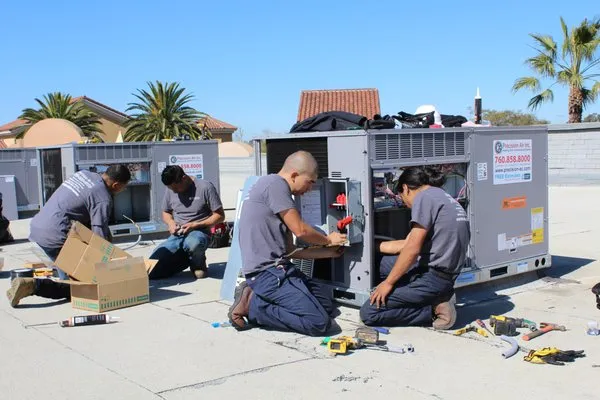
Precision Air Inc. in Poway, CA, is a locally owned and operated HVAC company founded by Stephen Diefenderfer, a veteran HVAC expert with over two decades of hands-on experience. Stephen began his car...
Heat Busters
Heat Busters Inc is a family-owned HVAC service provider serving Poway and the greater San Diego area. As licensed residential specialists, we focus on comprehensive heating, ventilation, and air cond...
GVK Heating & Air is a family-owned HVAC business serving Poway and San Diego County since 2002. Founded by Victor Krivoshey and now led by his son George, we’ve built our reputation on honest service...
Stephen Diefenderfer, President of Precision Air in Poway, began his two-decade HVAC career as a maintenance technician, working his way up through every role in the trade before founding his own comp...
Perfect Heating & Air is a true family affair. Founded in 2004 by Christian and Audra Baecker and operated with their four sons, this husband-and-wife team brings deep-rooted values to every job. Chri...

Arctic Air is a locally-owned and operated heating and cooling service based in Poway, CA, dedicated to providing reliable HVAC solutions for residential needs. Founded with the goal of becoming the m...
Airight Cooling, Heating & Plumbing
Since 2007, Airight Cooling, Heating & Plumbing has been a trusted, family-owned provider for Poway and the greater San Diego area. We build our reputation on a simple promise: to treat your home like...
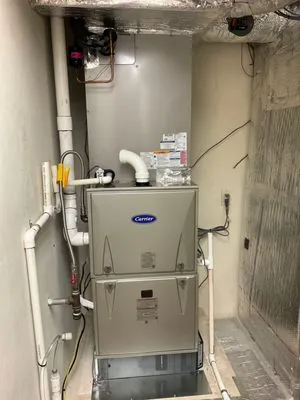
Camino Air Conditioning is a locally owned HVAC service provider that has been serving Poway and surrounding communities since 1981. As a trusted heating and air conditioning contractor, we specialize...
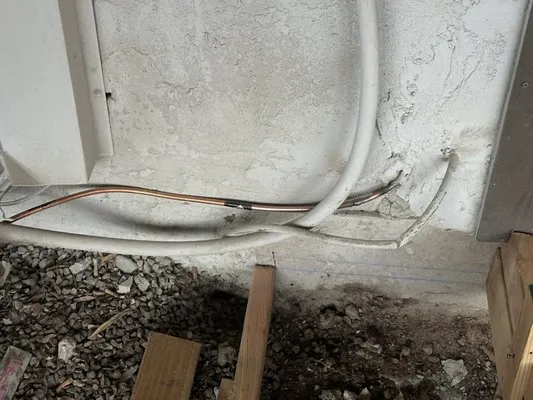
AC Plus Heating and Air is a trusted, locally-owned HVAC contractor serving Poway and the greater San Diego area since 1996. With over 30 years of combined experience, our team provides reliable and h...

Air Flohs is your trusted HVAC partner in Poway, serving the community with integrity and dependable service. We specialize in residential and light commercial heating and cooling solutions, handling ...
FAQs
What should I know about permits and safety for a new AC installation in 2026?
All HVAC replacements in Poway require a permit from the City of Poway Development Services Department to ensure compliance with California Title 24 energy codes and mechanical safety standards. Since 2025, new systems predominantly use A2L refrigerants like R-454B, which are mildly flammable. Installations must follow strict EPA Section 608 guidelines and manufacturer specifications for leak detection, clearance, and labeling, which are verified during the city's inspection process.
Our air conditioner just stopped blowing cold air on a hot day in Old Poway. How fast can someone get here?
A no-cool emergency requires immediate diagnosis, often of a failed capacitor or refrigerant leak. From our service hub near Poway Community Park, we can dispatch a technician directly via I-15. For homes in Old Poway, this routing typically ensures a technician is on-site within 15 to 20 minutes to restore cooling and prevent further strain on the system.
My Ecobee thermostat is showing an 'E1' alert. What does that mean?
An Ecobee E1 alert indicates the thermostat has lost communication with the outdoor HVAC unit. In Poway, this often points to a control wire issue exacerbated by heat exposure in the attic or a failed low-voltage transformer at the air handler. It can also signal a safety lockout on the condenser itself. This specific error requires a technician to diagnose the control circuit, as it prevents the system from responding to cooling or heating demands.
What does the new 14.3 SEER2 minimum efficiency standard mean for my power bill?
The 14.3 SEER2 mandate, effective in 2026, sets a new baseline for system efficiency, requiring about an 8% improvement over the old SEER rating. For a typical 3.5-ton system in Poway, this translates to meaningful savings against SDG&E's $0.48 per kWh rate. The federal Inflation Reduction Act rebate of up to $8,000 for qualifying heat pump installations can offset a significant portion of the upgrade cost, improving the payback period on your investment.
My house was built around 1978 and still has the original HVAC unit. Is it on borrowed time?
A unit from 1978 is now 48 years old, which is far beyond its expected service life. In Poway's semi-arid climate with its 93°F design temperature, these older systems have endured decades of extreme thermal cycling. This age and heat exposure directly contribute to the most common failure point: capacitor degradation. The internal components dry out and lose their ability to hold a charge, leading to a hard start condition or complete system failure during peak demand.
I use gas heat now. Does a heat pump make sense for Poway's climate?
A modern cold-climate heat pump is a viable primary heating source for Poway, where winter lows rarely challenge its capacity. The economic case is strengthened by SDG&E's peak electricity rates from 4 PM to 9 PM; a well-insulated home allows the heat pump to operate efficiently outside those hours. Combining the up to $8,000 federal rebate with the unit's high efficiency for both heating and cooling can provide significant long-term savings over a gas furnace and separate AC unit.
With wildfire smoke and spring pollen, can my current ducts handle a better air filter?
Addressing Poway's April pollen peak and wildfire PM2.5 risk requires advanced filtration, such as a MERV-13 filter. However, your existing flexible ducting with R-6 insulation may create static pressure issues if the blower motor is not sized for the increased restriction. A technician should perform a static pressure test before installing a high-MERV filter; often, sealing leaky ducts or upgrading the blower is necessary to maintain proper airflow and system efficiency.
Why does my AC struggle on days over 100°F when it's rated for 93°F?
Your system's capacity is calibrated for Poway's official 93°F design temperature, which represents a typical summer peak. On days exceeding 100°F, the system operates beyond its designed heat-load removal capacity, reducing its output and efficiency. Modern systems using R-454B refrigerant maintain better performance at these higher ambient temperatures compared to older R-410A units, but all systems will experience reduced cooling capability during extreme temperature excursions.
