
Top Emergency HVAC Services in Firestone, CO, 80504 | Compare & Call


Vertical Heating & Cooling
Vertical Heating & Cooling is a locally and veteran-owned HVAC, plumbing, and water heater service provider based in Firestone, Colorado. We specialize in comprehensive solutions for heating, cooling,...
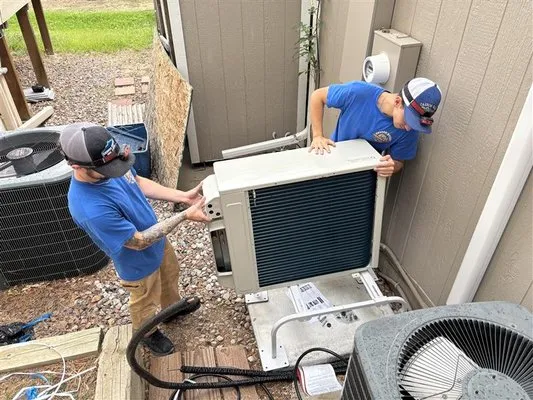
For over two decades, Carbon Valley Heating and Air has been the trusted local HVAC expert for Firestone, CO, and nearby communities. As a family-owned and operated business since 1999, we've built ou...

Colorado Proud Heating And Cooling
For over 17 years, Hans and the team at Colorado Proud Heating & Cooling have been the trusted, hands-on HVAC experts for Firestone families. Born from a desire to move away from corporate models and ...

Kingdom 1st Heating and Cooling
Kingdom 1st Heating and Cooling is a trusted HVAC and water heater service provider in Firestone, Colorado, founded and operated by owner Matt Gorden. With 15 years of hands-on experience, Matt has bu...
All Around HVAC is a trusted, locally-owned HVAC company serving Firestone, Colorado, and the surrounding communities. We specialize in providing comprehensive heating and cooling solutions for both h...
Home Services at The Home Depot
Home Services at The Home Depot in Firestone, CO, is a trusted local provider specializing in professional installation and repair services for flooring, windows, and HVAC systems. With a team of lice...
Utopia Mechanical is your trusted Firestone, CO heating and air conditioning expert. We understand the local climate and common home comfort challenges, including frustrating air handler fan failures ...
Questions and Answers
Our Ecobee thermostat is showing an 'E4' alert. What does this mean for our system?
An Ecobee E4 code specifically indicates the thermostat has lost communication with the outdoor AC or heat pump unit. In Firestone, this fault is often traced to a tripped high-pressure switch, a failed control board, or a low-voltage wire damaged by wildlife or weather exposure. This loss of signal prevents the system from starting, so addressing the E4 alert promptly is key to restoring operation before the next high-temperature day.
Why does our air conditioner struggle when temperatures climb above 95 degrees?
HVAC systems in Firestone are typically sized for a 91°F design temperature, based on local historical data. When ambient temperatures exceed this, the system must run continuously to maintain setpoint, and its capacity to remove heat diminishes. Modern units using the new R-454B refrigerant maintain better performance and efficiency at these higher temperatures compared to older R-410A systems, but some capacity loss during extreme heat is an expected engineering limitation.
If our AC stops cooling on a hot afternoon in Settlers Village, how quickly can a technician arrive?
A service vehicle dispatched from the Firestone Regional Sports Complex area can typically reach Settlers Village within 8 to 12 minutes via I-25. For a no-cool emergency, the first step is to check the thermostat settings and the circuit breaker. A technician on that dispatch will begin diagnosing common immediate failures like a tripped float switch or a failed capacitor upon arrival to restore cooling as quickly as possible.
What does the new 13.4 SEER2 minimum efficiency standard mean for replacing our old unit?
The federal 13.4 SEER2 minimum, effective in 2026, ensures new systems use significantly less electricity than models from the early 2000s. With Xcel Energy rates near $0.14 per kWh, upgrading from a 10 SEER unit to a modern 16 SEER2 system can cut cooling costs by over 30%. The federal Inflation Reduction Act provides a $2,000 heat pump tax credit, which directly offsets the cost of qualifying high-efficiency equipment, improving the return on investment.
Our air conditioner is original to our Firestone home. Is it near the end of its service life?
Units installed when a home was built around 2007 are now approximately 19 years old, which exceeds the typical 12-15 year design life for HVAC equipment. In the semi-arid climate of Firestone, these older systems are particularly susceptible to evaporator coil icing. The large diurnal temperature swings, often from 50°F at night to 90°F during the day, cause the refrigerant charge to fluctuate, which can lead to low suction pressures and eventual ice formation on the indoor coil.
What should we know about permits and safety for a new AC installation in 2026?
All HVAC replacements in Firestone require a permit from the Town of Firestone Building Department, which ensures the installation meets current mechanical and electrical codes. Since 2026, new systems predominantly use A2L refrigerants like R-454B, which are mildly flammable. This mandates that technicians follow strict EPA Section 608 guidelines for handling and that new equipment includes required safety sensors and markings, making professional, permitted installation non-negotiable for safety and warranty compliance.
Is switching from our gas furnace to a heat pump a practical choice for Firestone winters?
Modern cold-climate heat pumps are engineered to provide efficient heat down to near 0°F, making them a viable primary heat source for the Firestone area. The economics are strengthened by the $2,000 federal tax credit and Xcel Energy rebates. To manage operating costs, it is advisable to set the heat pump to handle heating needs during off-peak hours and use a hybrid system with your existing gas furnace as backup during the coldest nights or the utility peak period from 2 PM to 7 PM.
Can our home's ductwork support better air filters for wildfire smoke and spring pollen?
Your existing galvanized sheet metal ducts with R-6 wrap are generally robust and can often handle increased static pressure from higher-grade filters. For the wildfire PM2.5 and May pollen peaks common here, a MERV-13 filter is recommended for particle capture. However, it is critical to have a technician measure the system's static pressure after installation; an overly restrictive filter can reduce airflow, diminish cooling capacity, and strain the blower motor.
