
Top Emergency HVAC Services in Granby, CT, 06035 | Compare & Call

Falcon Heating and Cooling is your trusted, locally owned HVAC partner in Granby, CT. We are dedicated to providing reliable heating and air conditioning solutions for your home or small business. Our...
Shaffer Beacon Mechanical is a Granby-based HVAC and plumbing company built on three generations of family expertise. Our journey began in the 1940s with Clifford Riggott's respected commercial heatin...

State Line Oil is a trusted, family-owned heating and cooling business proudly serving Granby, CT, and the surrounding region since 1961. Founded on a legacy of hard work and community focus, Brian, w...
State Line Propane & Oil
Founded in 1999, State Line Propane & Oil is a family-owned and operated business serving Granby, the Farmington Valley, and surrounding areas. Owner Brian Guarco brings decades of experience from the...

Richie's Heating & Cooling is your trusted, local HVAC expert in Granby, CT. We specialize in keeping your home's heating and cooling systems safe and reliable, directly addressing common local concer...
Fire and Ice Heating and Air Conditioning
Fire and Ice Heating and Air Conditioning is a trusted Granby, CT, HVAC service provider dedicated to keeping local homes comfortable year-round. We understand the common frustrations Granby homeowner...
FAQs
How do modern systems handle Granby's summer temperatures compared to design specifications?
Granby's 87°F design temperature represents the 1% extreme condition that systems must maintain, though actual summer highs often reach 90-95°F. Modern R-454B refrigerant systems maintain capacity better than older R-410A units in these above-design conditions, with less efficiency degradation at high ambient temperatures. Properly sized equipment using Manual J calculations accounts for this buffer, ensuring reliable cooling during heatwaves while avoiding short-cycling. The refrigerant's lower global warming potential also aligns with 2026 environmental standards for Connecticut installations.
What permits and safety standards apply to new HVAC installations in Granby for 2026?
All Granby HVAC installations require permits from the Granby Building Department, with specific 2026 requirements for A2L refrigerant systems like R-454B. These standards mandate leak detection systems, emergency ventilation, and technician certification due to the refrigerant's mild flammability. Installations must comply with Connecticut's updated mechanical codes addressing charge limits and equipment placement. Proper documentation of these safety measures is required for final inspection and to qualify for HEEHRA rebates through the Inflation Reduction Act.
What does the 2026 SEER2 requirement mean for my Granby home's cooling costs?
The 14.3 SEER2 minimum represents a 15% efficiency improvement over previous standards for Connecticut homes. At Granby's 26¢/kWh rates, upgrading from a 10 SEER system to a 16 SEER2 unit saves approximately $300 annually on cooling. The Inflation Reduction Act's HEEHRA rebate provides up to $8,000 toward qualifying high-efficiency installations, making the payback period under 5 years for most homeowners. These combined savings offset the initial investment while reducing grid strain during peak demand periods.
My Granby home's HVAC system seems to be struggling with frozen coils each spring. Could its age be a factor?
Systems in Granby built around 1985 are now about 41 years old, which exceeds typical equipment life expectancy. Older units often develop refrigerant leaks or airflow restrictions that become critical during our extreme winter-to-spring transitions. When temperatures swing from freezing nights to mild days, these compromised systems can't manage the changing load properly, leading to frozen evaporator coils. The age-related wear on components like expansion valves and compressors makes them particularly vulnerable to this seasonal pattern.
Does switching from propane heat to a heat pump make sense for Granby's climate and utility rates?
Modern cold-climate heat pumps operate efficiently down to -15°F, making them viable for Granby's winter lows when properly sized. With propane prices volatile and electricity at 26¢/kWh, dual-fuel systems using propane as backup during CT's 15:00-20:00 peak hours often provide the lowest operating costs. The HEEHRA rebate covers heat pump installations, while Eversource offers additional incentives up to $1,500. A Manual J load calculation determines the optimal balance between heat pump capacity and propane backup for your specific home.
Can Granby homes with older ductwork handle better air filtration for ozone and pollen concerns?
Granby's galvanized sheet metal ducts with external fiberglass wrap typically support MERV-13 filters without static pressure issues when properly sized. This filtration level captures 85% of May's peak pollen particles while reducing ozone byproducts from indoor chemical reactions. However, existing duct systems should undergo static pressure testing before upgrading filters, as accumulated debris or undersized returns can create airflow restrictions. Properly implemented, MERV-13 filtration significantly improves indoor air quality during both pollen season and ozone advisory days.
If my Granby Center home loses cooling during a heatwave, how quickly can emergency service arrive?
Emergency no-cool calls in Granby Center typically see a 5-10 minute response time from technicians based near Salmon Brook Park. Our service vehicles use CT-10 for direct access to neighborhoods throughout Granby, avoiding traffic bottlenecks that delay other providers. This routing allows immediate diagnosis of critical failures like compressor lockouts or refrigerant loss. Quick response prevents secondary damage to components and minimizes discomfort during peak temperature hours.
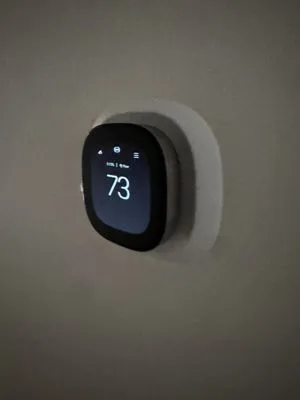
My Ecobee thermostat in Granby shows an E1 error code. What does this indicate about my system?
The Ecobee E1 error signals a communication failure between the thermostat and HVAC equipment, often stemming from wiring issues or control board problems. In Granby homes, this frequently appears during seasonal transitions when temperature swings stress electrical connections. The error prevents proper system operation regardless of cooling or heating demand. Diagnosis typically involves checking the common wire connection at both the thermostat and air handler, as voltage fluctuations during Granby's humid continental climate shifts can disrupt low-voltage signals.
