
Top Emergency HVAC Services in Pace, FL, 32571 | Compare & Call


Wicker Bills is a trusted, full-service provider in Pace, FL, specializing in landscaping, HVAC, and irrigation solutions. We help local homeowners maintain comfortable, beautiful properties year-roun...
Mathews Heating & Air
Mathews Heating & Air is a family-owned HVAC company serving Pace, FL, and surrounding communities since 1996. Founded by Christian, a Pensacola native and proud family man, the business is built on l...

McGreevy's Heating And Air is your trusted, locally-owned HVAC company serving Pace and the surrounding communities. We specialize in expert installation, replacement, and repair of heating and coolin...
With over 45 years of hands-on experience since 1972, Gary Prather has built Air Comfort Service on a foundation of deep technical knowledge and local reliability. Trained to service all brands of air...
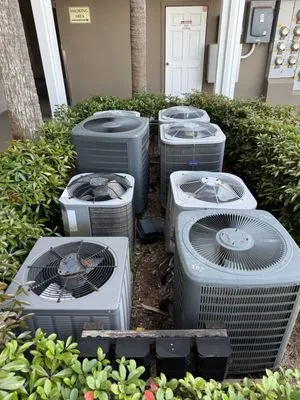
Eckcess Air is your local HVAC specialist serving Pace and the broader Gulf Coast of Florida. With over a decade of dedicated experience, our licensed team provides reliable heating and cooling soluti...
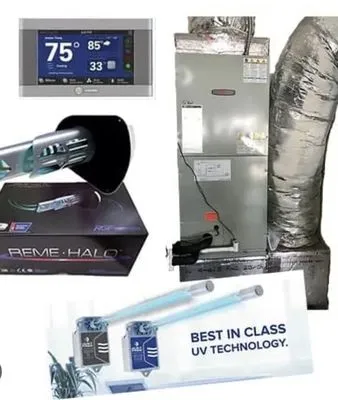
Simplified Heating And Air in Pace, FL was founded on a simple principle: treating customers like neighbors, not just clients. Owner John's journey began at 18, learning the HVAC trade from seasoned p...
Emerald Coast Air Conditioning and Heating
Emerald Coast Air Conditioning and Heating is a family-owned HVAC company serving Pace, Florida, and the surrounding Panhandle. With over 20 years of combined experience, our team provides reliable he...
Escarosa Cooling & Heating is a trusted, locally-owned HVAC company serving the Pace, FL community. We understand the specific climate challenges homes and businesses face here, from high humidity to ...
Abe Air Conditioning & Plumbing is your trusted local HVAC and plumbing expert serving Pace, FL. We specialize in diagnosing and fixing the most common cooling issues that affect homes in our area, es...
Nautical Air is your trusted, local HVAC expert serving the homes and families of Pace, FL. We understand the common frustrations Pace residents face, like thermostat malfunctions and unexpectedly hig...
Q&A
Between ozone alerts in summer and spring pollen, can my current HVAC system improve our indoor air?
Yes, targeted filtration addresses both ozone precursors and pollen. A MERV-13 filter captures over 85% of pollen particles and can reduce the concentration of particulates that contribute to ground-level ozone formation indoors. However, the flexible insulated ductwork common in many Pace homes from the 1990s can restrict airflow if the filter is too dense. A professional should check the system's static pressure to ensure it can handle MERV-13 without straining the blower motor or reducing comfort.
I keep hearing about new SEER2 standards and rebates. What does this actually mean for my electric bill?
The 15.2 SEER2 mandate ensures new equipment uses substantially less electricity to move the same amount of heat. For a typical 3.5-ton home in Pace, upgrading from a 13 SEER unit to an 18 SEER2 model can save over 600 kWh during peak summer months. Combined with Gulf Power or FPL efficiency rebates of $150 to $500, the payback period shortens. The larger federal HEEHRA rebate of up to $8,000 for heat pumps makes high-efficiency models more accessible than ever, directly reducing long-term operating costs against the $0.14/kWh rate.
My Ecobee thermostat just showed an 'E1' alert. What is this, and is it urgent?
An Ecobee E1 alert indicates the thermostat is not detecting a signal from your HVAC equipment, often due to a loss of 24V power at the indoor air handler. In Pace, this is a frequent early warning of a tripped float switch from a clogged condensate drain line—a common issue in our humid climate—or a failed control board. It is a prompt to check for water around the unit before it causes damage, but it typically doesn't indicate an immediate compressor failure. Addressing it quickly can prevent a full 'No-Cool' situation on a humid day.
My central AC unit seems to be struggling and is about as old as my house. Is that normal for our area?
A system from the late 1990s, now over 30 years old, is well beyond its expected service life. In Pace, this age compounds with our coastal proximity to create a common failure point: salt-air induced evaporator coil corrosion. The aluminum fins and copper tubing degrade internally from repeated condensation and salt exposure, leading to refrigerant leaks and reduced cooling capacity. This specific environmental factor accelerates wear compared to inland locations.
If my AC stops working on a hot afternoon near Pace High School, how quickly can someone get here?
A technician can typically be dispatched from the Pace Suburban Center within 12 to 18 minutes. Our service routing uses US Highway 90 for fast east-west access, allowing us to reach homes around the Pace High School area promptly. For a 'No-Cool' emergency, the first step is always to check your circuit breakers and the outdoor unit's disconnect switch before calling.
I have electric heat strips now. Is switching to a heat pump a practical idea for our mild winters?
Switching from electric resistance heat to a modern heat pump is highly practical and economical for Pace. Even with winter lows in the 30s, a cold-climate heat pump operates efficiently, delivering over 300% more heat per unit of electricity than heat strips. To maximize savings, a smart thermostat can be programmed to avoid supplemental strip heat during utility peak hours from 1 PM to 7 PM. This shift leverages the same system for efficient cooling in summer and heating in winter, qualifying for significant federal rebates.
What are the rules for installing a new AC system in Santa Rosa County now that refrigerants have changed?
All new installations in Santa Rosa County require a permit from the Santa Rosa County Building Inspections Department. As of 2026, systems using A2L mildly flammable refrigerants like R-454B must comply with updated safety standards in the Florida Building Code and NFPA 15.2. This includes specific requirements for leak detection, equipment labeling, and technician certification (EPA Section 608). The permit process ensures the installation meets these updated codes for safe operation and proper refrigerant charge in our climate.
Why does my AC sometimes seem to run constantly on the hottest days? Isn't it designed for our weather?
HVAC systems are engineered to a specific design temperature, which for Pace is 93°F. On days when the actual temperature exceeds this—which happens regularly—the system must run longer to maintain setpoint, as its capacity diminishes. The newer R-454B refrigerant standard for 2026 offers slightly better high-temperature performance and lower global warming potential than older refrigerants. Proper sizing via a Manual J load calculation is critical to minimize this performance gap during our most intense heat.
