
Top Emergency HVAC Services in Grinnell, IA, 50112 | Compare & Call

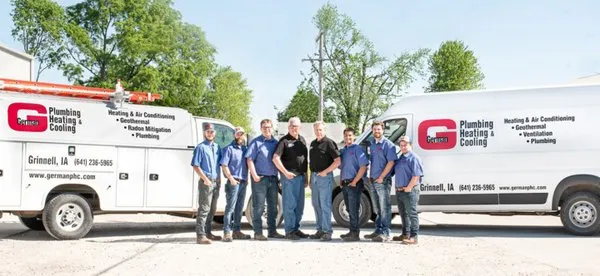
German Plumbing Heating & Cooling
For over 125 years, German Plumbing Heating & Cooling, Inc. has been the trusted, family-owned mechanical contractor for Grinnell, Poweshiek County, and the surrounding Jasper County area. We provide ...

Jensen Heating & Air Conditioning is a family-owned and operated HVAC company serving Grinnell, Iowa, and the surrounding communities since 1987. Founded by Tracy and Vicki Jensen, the business has gr...

Bruce Heating & Cooling is a trusted HVAC service provider serving Grinnell, IA, and the surrounding areas. With years of experience, we specialize in diagnosing and fixing common local heating and co...
Latcham Enterprises Geothermal Heating & Cooling
Latcham Enterprises has been a trusted name in Grinnell since 1961, providing expert electrical, plumbing, heating, and cooling services. Today, as Energy Savings Specialists, we focus on helping our ...
Service Experts is a trusted, locally-operated HVAC company serving Grinnell and the surrounding areas. We specialize in solving the common and frustrating heating and cooling problems faced by Iowa h...
FAQs
Why does our air conditioner struggle when it gets above 95 degrees?
Central Iowa HVAC systems are engineered to a 89°F design temperature, meaning they are sized to maintain comfort efficiently up to that outdoor temperature. During heatwaves that exceed this limit, the system must run continuously and may not maintain the desired indoor setpoint, which is normal. Modern systems using R-454B refrigerant maintain better capacity and efficiency at these higher temperatures compared to older R-22 units. Proper sizing from a Manual J load calculation ensures the system is matched to the home's specific heat gain, preventing chronic underperformance.
Can we upgrade our furnace filter to help with Iowa's spring pollen and ozone?
Upgrading filtration to a MERV-13 filter can effectively capture pollen and fine particulates, which is beneficial during the May pollen peak and for mitigating regional ozone risk. However, the existing galvanized steel ductwork in many Grinnell homes was not designed for the higher static pressure these filters create. Installing a high-efficiency filter without evaluating duct static pressure can severely restrict airflow, reducing cooling capacity and potentially damaging the blower motor. A technician should perform a static pressure test before recommending a filter upgrade or supplemental air cleaner.
What should we know about permits and safety for a new A/C installation?
All HVAC replacements in Grinnell require a permit from the Grinnell Building and Zoning Department, which ensures compliance with current mechanical and electrical codes. Since 2025, new systems predominantly use A2L refrigerants like R-454B, which are mildly flammable. This mandates specific safety standards under UL 60335-2-40, including leak detection, updated service practices, and equipment room requirements that certified technicians must follow. Proper permitting and installation according to these 2026 standards are crucial for system safety, performance, and to validate manufacturer warranties and rebate eligibility.
Our Ecobee thermostat is showing an E1 error. What does that mean here?
An Ecobee E1 error indicates the thermostat has lost communication with the HVAC equipment, often due to a loss of 24V control power. In Grinnell, this is frequently caused by a tripped float switch from a clogged condensate drain line, a safety feature to prevent water damage. It can also signal a failed control board, blown low-voltage fuse, or a disconnected wire. Given the age of many local systems, this alert often precedes a more significant component failure and warrants a professional diagnostic to identify the root cause.
We use gas heat now. Is a heat pump a good idea for Grinnell's winters?
Modern cold-climate heat pumps are a viable primary heat source for Grinnell, operating efficiently at temperatures well below freezing. The economic case depends on the relative cost of natural gas versus electricity. Operating during Alliant Energy's peak hours of 2 PM to 7 PM can be more expensive. A hybrid or dual-fuel system, which pairs a heat pump with a gas furnace for the coldest hours, often provides the optimal balance of comfort and operating cost. The available federal rebates make this transition more financially accessible for qualifying homeowners.
Our air conditioner stopped working on a hot day near Grinnell College. How fast can someone get here?
A no-cool emergency near the Grinnell College campus receives priority dispatch. Technicians based near the I-80 corridor can typically reach most Downtown Grinnell addresses within 5 to 10 minutes. The first diagnostic steps involve checking for a tripped circuit breaker or a frozen indoor coil, which are common quick-resolve issues. For persistent failures, a service van carries common capacitors and contactors to restore cooling rapidly while a full diagnosis proceeds.
What does the new 13.4 SEER2 minimum mean for our electricity bill?
The 13.4 SEER2 federal minimum effective in 2026 represents a significant efficiency upgrade for Grinnell's typically aging stock of units. Compared to a system from the 1990s operating at 10 SEER, a new 16 SEER2 unit can reduce cooling energy use by over 30%. At Alliant Energy's current rate of $0.14 per kWh, this translates to tangible savings. The Inflation Reduction Act's HEEHRA rebates, offering up to $8,000 for qualified heat pump installations, can dramatically offset the upgrade cost and improve the payback period.
Our system is original to our 1972 house. Should we expect it to fail soon?
HVAC systems installed in Grinnell's average 1972 homes are now 54 years old, well beyond a typical 15-20 year service life. This age makes the galvanized steel ductwork and original components highly susceptible to the common failure points of condensate line freezing and blower motor wear. The repeated thermal cycling of Iowa's humid continental climate accelerates metal fatigue and electrical insulation breakdown. Proactive replacement is advised to prevent a complete system failure during peak demand.
