
Top Emergency HVAC Services in Chicago, IL, 60007 | Compare & Call

Chicago Appliance Repair Doctor
Chicago Appliance Repair Doctor is a family-owned business rooted in the heart of the city. Founded by brothers who grew up in Bucktown and Logan Square, the company embodies the strong work ethic and...
Browns Heating & Cooling has been a trusted Chicago-area HVAC provider since 2014. Serving both residential and commercial clients in Cook County with EPA-certified, factory-trained technicians, we sp...
Preferred Comfort Heating & Cooling
Preferred Comfort Heating & Cooling was founded by Vinicio "Vini," a Chicagoland HVAC expert with over two decades of experience. After graduating from Coyne American Institute in 1999 and working for...
Chicago HVAC Repair Doctor
I'm Rafael, the owner of Chicago HVAC Repair Doctor. After 20 years in the HVAC trade, my wife and I started this family-run company in 2011 to build a business our kids could be proud of. Here, you’l...
Hero Air is a Chicago family-owned HVAC company founded on a passion for solving problems and ensuring homes are safe, comfortable havens. With over 15 years of hands-on experience, our founder starte...
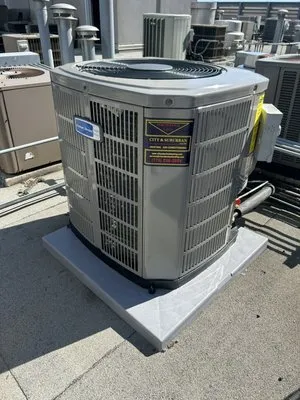
City & Suburban Heating & Cooling
As a dedicated member of the City & Suburban Heating & Cooling team for over two decades, I bring a commitment to service honed from my time as a U.S. Army veteran directly to the homes of our Chicago...
HVAC Royal Service is a licensed and insured HVAC contractor dedicated to serving residential and commercial clients throughout the Greater Chicago area. We specialize in comprehensive heating and coo...
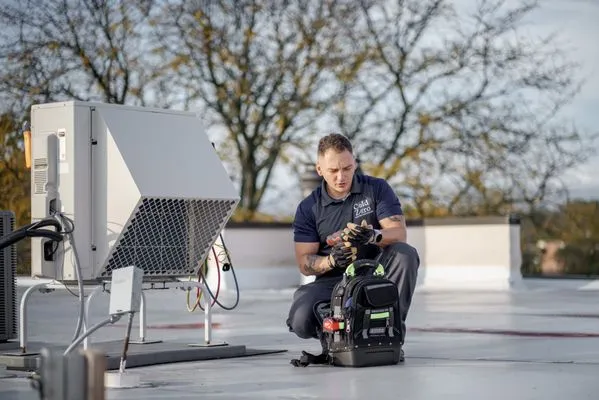
Cold Zero HVAC and Appliance Repair
Cold Zero HVAC and Appliance Repair is a locally owned and operated service in Chicago, IL, founded by Val, who brings over 5 years of industry experience and a passion for helping residents. Licensed...
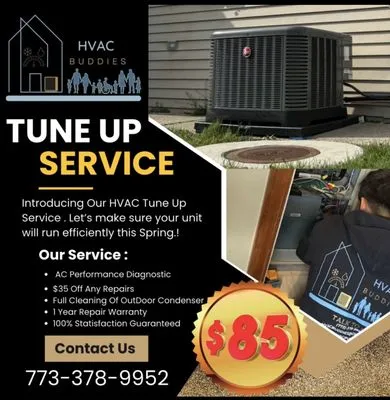
At HVAC Buddies in Chicago, our journey began with a simple passion for the trade and a commitment to leadership in home comfort. We've built a talented team dedicated to doing the job right the first...
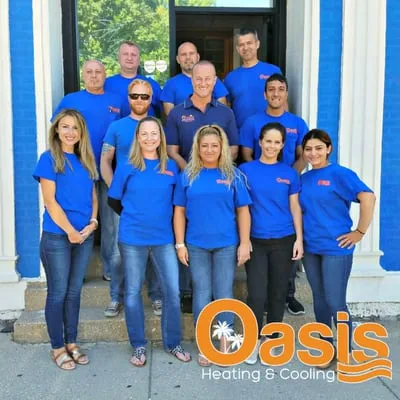
Oasis Heating & Cooling
Founded in 1997 by Mike Causevic, Oasis Heating & Cooling is a Chicago-based, family-run business built on a foundation of trust and fair pricing. Mike, a former HVAC specialist for the Museum of Scie...
Q&A
What should we know about permits and safety for a new AC installation in 2026?
All HVAC replacements in Chicago require a permit from the City of Chicago Department of Buildings. For 2026, this is especially critical as the new standard refrigerant, R-454B, is an A2L classification, meaning it is mildly flammable. Installations must follow updated codes for leak detection, ventilation, and circuit breaker placement. Using a licensed contractor ensures the work meets these 2026 safety standards for refrigerant charge and system labeling, keeping your installation compliant and insured.
Is it worth replacing an old AC unit now, or should we wait?
The 2026 federal minimum efficiency standard is 13.8 SEER2, but modern systems easily achieve 16-18 SEER2. At Chicago's average electricity rate of $0.16 per kWh, upgrading from an 8 SEER unit to an 18 SEER2 model can cut cooling costs by over 50%. The active Inflation Reduction Act (HEEHRA) rebates of up to $8,000 for qualified heat pump installations make this an advantageous financial moment for an upgrade, significantly offsetting the initial investment.
Our furnace is original to our Lincoln Park home. How much longer can we expect it to last?
A system installed in a 1952 home is now 74 years old, which far exceeds the 15-20 year typical service life. In Chicago's humid climate, the constant thermal expansion and contraction of aging galvanized steel heat exchangers often leads to stress cracks. These cracks are a primary failure point, as they can allow combustion gases to mix with the air circulating in your home. Proactive inspection with a combustion analyzer is critical for safety at this age.
Why does our AC seem to struggle on the very hottest days of summer?
Chicago's residential cooling systems are engineered to a design temperature of 89°F. On days that exceed this, which occur several times each summer, the system runs continuously to try to maintain setpoint and may not be able to keep up. The newer R-454B refrigerant standard performs well in these high-ambient conditions, but an undersized or aging system will still show its limits. Proper sizing via a Manual J load calculation is essential for consistent performance during heat waves.
Our Ecobee thermostat is showing an 'E4' alert. What does that mean for our system?
An Ecobee E4 error code indicates the thermostat is not detecting a call for heat or cool from your HVAC equipment. In Chicago, this often points to a safety lockout on the furnace control board, frequently triggered by a clogged condensate line causing a wet switch trip, or a failed ignition sequence. First, check and clear the condensate drain line. If the alert persists, it likely signals an electrical control issue that requires a technician to diagnose the furnace's error code history.
We use natural gas heat. Is a heat pump a practical primary system for Chicago winters?
Modern cold-climate heat pumps are rated for full capacity down to 5°F, making them viable for Chicago's winter lows. The key is pairing them with a properly sized, variable-speed air handler. To manage operating costs, it's wise to avoid extended operation during ComEd's peak electricity hours from 2 PM to 7 PM. Utilizing the federal rebate of up to $8,000 and ComEd's efficiency incentives of $200-$600 creates a strong economic case for transitioning from natural gas.
If our AC stops working on a hot day near Millennium Park, how fast can a technician arrive?
A technician dispatched from our service center can typically reach Lincoln Park via the Kennedy Expressway (I-90/94) in 25 to 35 minutes during standard traffic conditions. We prioritize no-cool calls on high-design-temperature days to restore comfort and prevent indoor humidity from spiking. Upon arrival, we first check for common issues like a tripped breaker, a dirty air filter, or a frozen condensate line, which is a frequent culprit in our climate.
Can our home's existing ductwork handle better air filters for spring pollen and PM2.5?
Spring pollen peaks in May coincide with persistent particulate matter (PM2.5) risks in Chicago. While a MERV-13 filter is excellent for capturing these particles, your home's original galvanized steel ducts may not handle the increased static pressure. A technician should measure your system's external static pressure before installing high-MERV filters. If pressure is too high, it can reduce airflow, strain the blower motor, and cause the evaporator coil to freeze, negating the air quality benefit.
