
Top Emergency HVAC Services in Linton, IN, 47441 | Compare & Call

There are 21 hvac companies server in Linton IN
Bates Mechanical, Inc. Heating & Cooling is a licensed and bonded HVAC service company based in Freedom, IN, specializing in residential and light commercial heating and cooling solutions. As the area...

Commercial Service has been a trusted heating, cooling, and plumbing provider for Bloomington, IN, since 1946. As one of Indiana's largest Residential Trane Dealers, we offer comprehensive HVAC and pl...
Couch & Sons is a family-owned HVAC and air duct cleaning company serving Terre Haute, IN, with over 15 years of hands-on experience. We specialize in comprehensive indoor air quality and climate cont...
Kingdom Air has been the trusted name for home comfort in Cannelburg and Southwest Indiana for over 35 years. Founded by Bob in 1989, the company has grown from a family room operation to a dedicated ...

New Gen Mechanical
New Gen Mechanical is your trusted local partner in Linton, IN, specializing in heating and air conditioning, plumbing, and general contracting services. We focus on building lasting relationships wit...
Knossos Contractor Grade is a trusted, family-owned and operated home service business proudly serving Sullivan, Indiana, and the surrounding communities. Founded and run by a father-son team, we are ...
Aire Serv of Terre Haute is a locally owned and operated HVAC company serving Terre Haute, IN and surrounding communities. Founded by Robert Keller in 2014 as Genesis HVAC and franchised with Aire Ser...
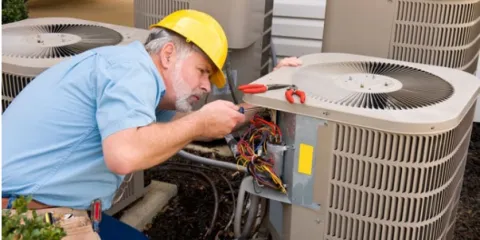
For over two decades, Stanford Heating & Cooling has been the trusted name for home comfort in Bloomfield, Indiana, and the surrounding communities. Since 1999, our licensed team has built a reputatio...
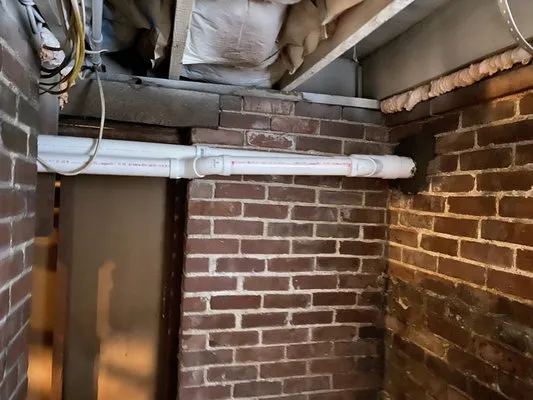
B&T Heating and Cooling is a licensed HVAC company serving Linton, IN, and surrounding areas with over a decade of experience. We specialize in heating and cooling solutions for both residential and c...
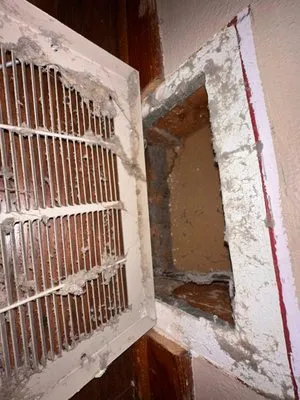
Maven Air Care
Maven Air Care is a trusted local HVAC and air quality specialist serving Fishers, IN. We specialize in comprehensive air duct cleaning, sanitization, environmental abatement, and proactive HVAC syste...
Estimated HVAC Service Costs in Linton, IN
Q&A
Should I consider switching from my gas furnace to a heat pump in Linton?
For Linton's climate with winter lows in the teens, a dual-fuel or cold-climate heat pump is a viable option. The economics depend on the Duke Energy rate of $0.14/kWh versus natural gas costs. Strategically, a heat pump can handle cooling and shoulder-season heating, letting the gas furnace operate only during the coldest utility peak hours (2 PM to 7 PM), optimizing annual fuel costs and comfort.
Is the new 14.3 SEER2 standard worth the upgrade cost with current electricity prices?
The 2026 federal 14.3 SEER2 minimum is a significant efficiency jump. For a typical 2.5-ton Linton home, upgrading from a 10 SEER unit to a 16 SEER2 model can save over $300 annually at the local $0.14/kWh rate. The active Inflation Reduction Act HEEHRA rebates, capped at $8,000, directly offset the higher upfront cost of qualifying high-efficiency equipment, making the payback period exceptionally short.
My air conditioner stopped on a hot day near Humphreys Park. How fast can a technician arrive?
For a no-cool emergency in Downtown Linton, our dispatch uses IN-54 for direct access, bypassing local traffic. From our service hub, a technician can typically be on-site at a home near the park within 5 to 10 minutes. We prioritize these calls during heat advisories to prevent indoor temperature spikes and system overloads that can cause compressor failure.
What are the permit and safety rules for a new A/C installation in Greene County?
All new installations require a permit from the Greene County Building Department. As of 2026, systems using A2L refrigerants like R-454B must comply with updated safety standards (UL 60335-2-40). This mandates leak detectors, revised pipe sizing, and specific circuit breaker requirements. A licensed contractor will handle this permitting process to ensure the installation meets both local code and the new federal refrigerant safety protocols.
My Ecobee thermostat shows an 'E1' alert. What does that mean for my system?
An Ecobee E1 error indicates the thermostat is not detecting a call for cooling or heating from your HVAC equipment. In Linton, this often points to a safety lockout on the control board due to a pressure switch fault or a failed ignition attempt on the gas furnace. It's a diagnostic signal prompting a technician check, as continued reset attempts can strain older components in your specific system configuration.
Why does my air conditioner struggle when it's only 95 degrees out?
Linton's HVAC systems are engineered to a 91°F design temperature, meaning they are sized to maintain a 20-degree delta T (temperature difference) at that outdoor condition. When temperatures exceed that limit, the system runs continuously to try and keep up. Modern units using R-454B refrigerant maintain better capacity and efficiency in these high-heat scenarios compared to older R-22 or R-410A systems.
Can my older home's duct system handle better air filters for ozone and pollen?
Linton's May pollen peak and summer ozone risk make advanced filtration valuable. Your existing galvanized steel ducts are generally robust, but installing a standard 1-inch MERV-13 filter can create excessive static pressure in an older system not designed for it. A better solution is a 4-inch media cabinet retrofit, which provides superior particle and pollen capture without restricting airflow to the furnace blower.
How old are most Linton air conditioners, and why do they fail?
Given the average home build year of 1944, many central cooling systems in Linton are around 20 years old or older. Units of this age, especially with original galvanized steel ductwork, are highly susceptible to condenser coil corrosion. Our humid continental climate accelerates this process, as moisture and airborne salts create an environment where aluminum fins deteriorate rapidly. This corrosion increases energy use and is the most common mechanical failure point we see locally.
