
Top Emergency HVAC Services in Westfield, IN, 46032 | Compare & Call

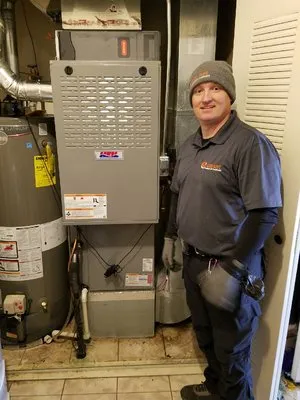
Good Guys Heating & Air Conditioning
Good Guys Heating & Air Conditioning is a technician-owned local business serving Westfield and Hamilton County. Founded on the principle of providing excellent service at comfortable prices, every te...
Integrity Heating and Air Conditioning
Integrity Heating and Air Conditioning was founded in Westfield, IN, by experienced technicians who were dissatisfied with corporate pressures to sell unnecessary replacements and rushed service. They...
Precision Comfort Systems was founded in Westfield, Indiana, in 1998 by Howard Newport and Gary Holt, each bringing over three decades of HVAC experience from the Indianapolis area. Their vision was t...

Snyders Heating & Air is a trusted, locally-owned HVAC company serving Westfield, IN, and the surrounding communities. We understand the specific challenges homeowners in our area face, such as heat p...
Sloderbeck Heating & Cooling is a trusted HVAC company serving Westfield, IN, and surrounding areas. We specialize in diagnosing and resolving common local heating and cooling problems that many homeo...
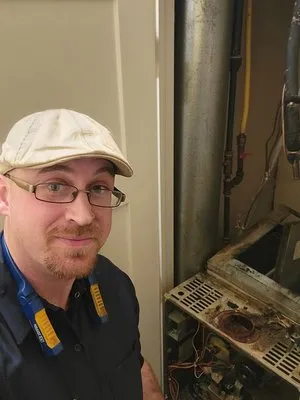
Shift Heating & Air has been a trusted HVAC partner for Westfield residents and businesses for over 15 years. We specialize in keeping homes comfortable year-round with reliable heating and air condit...
Pathway Home Services is a trusted heating and air conditioning (HVAC) company serving Westfield, IN, and the surrounding areas. We specialize in comprehensive HVAC solutions designed to address commo...
247 Plumbing Heating & Cooling
247 Plumbing Heating & Cooling is a trusted, full-service HVAC and plumbing company serving Westfield, IN, and the surrounding areas. We specialize in comprehensive plumbing inspections and HVAC solut...
Central Indiana Insulation
Central Indiana Insulation has been a trusted provider of mechanical insulation services for Westfield and the surrounding region since 2007. Licensed and bonded, we specialize in insulating complex c...
Air-Conn is a trusted Westfield, IN heating and air conditioning company dedicated to keeping local homes comfortable. We understand the common HVAC challenges faced by homeowners in our area, such as...
FAQs
What are the permit and safety requirements for installing a new AC with the latest refrigerant?
All new installations in Westfield require a permit from the Westfield Building Department, which ensures compliance with state mechanical and electrical codes. As of 2026, systems using A2L refrigerants like R-454B must adhere to updated UL 60335-2-40 safety standards. These mandate specific leak detectors, revised service port placements, and updated airflow requirements for equipment rooms. Proper certification and documentation of these safety features are required for the installation to pass final inspection.
My Ecobee thermostat is showing an E1 error code. What does this mean for my Westfield home's system?
An Ecobee E1 alert indicates the thermostat is not detecting a call for cooling or heating from your HVAC equipment. In our service area, this often points to a safety lockout on the indoor furnace control board, frequently triggered by a clogged condensate drain line—a common issue here due to algae. It can also signal a failed control transformer or a blown low-voltage fuse. This code helps prevent compressor damage by halting operation until the fault is cleared.
If my AC stops cooling on a hot afternoon in Downtown Westfield, how fast can a technician get here?
A dispatch from our service center near Grand Park Sports Campus provides a strategic advantage. Using US-31, we can typically reach any home in Downtown Westfield within 10 to 15 minutes. This routing avoids heavier traffic on State Road 32, allowing for a rapid diagnosis of common no-cool issues like a tripped float switch or capacitor failure.
Why does my AC struggle when it hits 95°F, even though it's supposed to be designed for our weather?
Local HVAC design uses a 89°F outdoor temperature as the standard load calculation benchmark. When temperatures exceed this, as they regularly do, the system must run continuously to maintain temperature, and its capacity drops. Modern systems using R-454B refrigerant maintain better performance and efficiency at these higher temperatures compared to older R-410A units, but all systems have a performance limit above their design condition.
With spring pollen and summer ozone alerts, can my current ducts handle a better air filter?
Upgrading filtration to combat May pollen peaks and ozone-related particulates is wise. Your existing galvanized sheet metal ductwork with external wrap is generally robust and can often accommodate a MERV-13 filter without major static pressure issues, unlike flex duct. A technician should measure static pressure before and after installation to ensure your blower motor isn't overworked, which protects both airflow and equipment life.
Given our cold winters and peak electricity rates, does switching from my gas furnace to a heat pump make sense?
A modern cold-climate heat pump is a viable primary heat source for Westfield's winters, especially when paired with a properly sized gas furnace as a hybrid backup. The key is managing operation during Duke Energy's peak hours from 2 PM to 7 PM, when rates are highest. A well-configured thermostat can use the gas furnace during those expensive periods and rely on the efficient heat pump during off-peak hours, optimizing comfort and operating cost.
I've heard about new efficiency rules. What does the 14.3 SEER2 minimum mean for replacing my old unit?
The 14.3 SEER2 mandate effective in 2023 sets a new baseline that is about 5% more stringent than the old SEER standard. For a typical 3-ton system in Westfield, upgrading from a 10 SEER unit to a new 16 SEER2 model at the local $0.144 per kWh rate can save over $450 annually. The federal Inflation Reduction Act rebates, capped at $8,000, can significantly offset the initial cost of these high-efficiency systems.
My Westfield home's air conditioner is original to the 2005 build. Should I be concerned about its age?
Units from that era are now 21 years old, which exceeds the typical 15-year service life. In our climate, the constant summer humidity heavily stresses the condensate drain system. This makes older systems particularly prone to the clogs and algae growth you mentioned, which can lead to water damage. Proactive maintenance can extend life, but efficiency and reliability will continue to decline.
