
Top Emergency HVAC Services in Davison, MI, 48423 | Compare & Call

Konieczka Heating & Cooling in Davison, MI is a family-owned and operated HVAC business with deep roots in the community. Founded in 1987 by Richard Konieczka, who started his career working from his ...
Holland Heating & Cooling
Since 1981, Holland Heating & Cooling has been the trusted HVAC provider for Mid-Michigan, with deep roots in Davison. As a local, family-operated business, we understand the specific heating and cool...
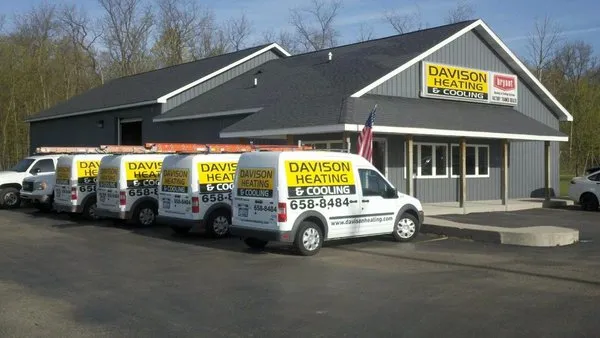
Davison Home Services
Davison Home Services has been a trusted local provider of heating, cooling, and electrical solutions for homes and businesses in the Davison area since 1998. We specialize in installing, maintaining,...

Matt's Heating and Cooling is Davison's trusted, full-service HVAC partner, dedicated to keeping local homes comfortable year-round. We understand the common frustrations Davison homeowners face, like...
Goyette Mechanical
For over 85 years, Goyette Mechanical has been a trusted partner for Mid-Michigan homes and businesses, providing reliable plumbing, HVAC, and electrical services. Based in Davison, our team of highly...
Eastern Heating & Air-Conditioning
Eastern Heating & Air-Conditioning is a Davison-based HVAC company dedicated to honest, transparent service for local homeowners. We offer reliable installation, repair, and maintenance for all heatin...
Top HVAC 2 is a trusted heating and air conditioning company serving Davison, MI homeowners with reliable HVAC solutions. We specialize in installation, repair, and maintenance services to address com...
Congdon's Heating & Cooling has been a trusted, family-owned HVAC provider in Davison, MI, for years. We specialize in addressing the specific challenges faced by local homeowners, such as uneven heat...
At DallAire Heating and Cooling in Davison, our passion is helping local homeowners and businesses achieve a safer, healthier, and more comfortable living environment. We go beyond simple repairs by p...
Questions and Answers
Davison summers can hit the mid-90s. Is my AC designed for those temperatures?
Standard residential AC systems in Davison are designed for a 88°F outdoor temperature. On days that exceed this design temp, the system must run longer and its capacity drops, which can lead to a temperature rise indoors. Modern units using the new R-454B refrigerant maintain better performance and efficiency at these higher temperatures compared to older R-410A systems, helping to close that performance gap during heat waves.
If my AC stops working on a hot afternoon in Downtown Davison, how quickly can a technician arrive?
For a no-cool emergency, a technician can typically be dispatched from our service hub near the Lake Callis Recreation Complex. Using I-69 for access, the drive to most Downtown Davison homes is 5 to 10 minutes. This rapid response is critical to prevent heat buildup and to diagnose issues like a frozen coil or capacitor failure before they cause further damage.
What are the permit and safety requirements for installing a new AC with the new refrigerant?
Any installation in Davison requires a permit from the City of Davison Building and Zoning Department. Since 2023, systems using mildly flammable A2L refrigerants like R-454B are the new standard. These installations must comply with updated 2026 safety codes, which mandate specific leak detectors, revised refrigerant line set practices, and updated equipment clearance labels. Hiring a certified technician ensures the installation meets these strict standards for safe operation in your home.
Our AC is original to our 1967 Davison home. What typically fails first in a system this old?
A unit installed in 1967 is now 59 years old. In Davison's humid continental climate, the most common failure point for a system of that age is the condensate line freezing or clogging. Galvanized sheet metal ductwork from that era often develops rust flakes and debris, which can wash into the drain pan and block the line. This blockage prevents proper dehumidification and can cause water damage or a system shutdown.
My old AC is still running. Is 2026 a good year to replace it for efficiency reasons?
Yes, 2026 is an optimal year for replacement due to new federal standards and rebates. The minimum efficiency is now 13.8 SEER2, but modern units easily reach 16-18 SEER2, cutting into Davison's average $0.18 per kWh cost. The active Inflation Reduction Act rebates can provide up to $8,000 for a qualifying high-efficiency system, and Consumers Energy offers an additional $600 HVAC rebate, making the net cost very favorable.
I use natural gas heat now. Does a heat pump make sense for our Davison winters?
A cold-climate heat pump is a viable option, especially with current rebates. While our winter lows can challenge older heat pumps, modern units are effective down to -5°F. Pairing it with your existing gas furnace as a dual-fuel system is often the most practical solution. This setup uses the efficient heat pump during milder weather and off-peak hours, then automatically switches to gas during the coldest periods or the 2-7 PM utility peak hours for maximum reliability and cost control.
My Ecobee thermostat is showing a 'C-Wire/Power Extender Kit Error' alert. What does this mean?
This specific Ecobee error indicates an issue with the 24-volt power supply from your HVAC system to the thermostat. In Davison homes with older systems, it often signals a failing transformer or a blown low-voltage fuse on the control board. It can also point to a short in the wiring. This alert is a predictive failure notice; ignoring it may lead to a complete system shutdown, as the thermostat will eventually lose power and cannot signal the equipment to turn on.
With May pollen peaks and PM2.5 risk, can my old ductwork handle a better air filter?
Upgrading filtration to combat pollen and particulate matter requires a static pressure check. Your home's original galvanized sheet metal ducts are robust but may be undersized for modern, restrictive filters. A MERV-13 filter can significantly improve air quality, but installing one without verifying system airflow can cause the blower motor to overwork and reduce cooling capacity. A technician should measure static pressure to ensure your system can handle the upgrade.
