
Top Emergency HVAC Services in Chesterfield, MO, 63005 | Compare & Call

There are 236 hvac companies server in Chesterfield MO
Wentzville Air & Refrigeration is a family-owned heating and air conditioning company proudly serving the Wentzville community. We specialize in providing reliable HVAC and refrigeration services for ...

Mid-State Mechanical is a locally owned and operated HVAC contractor proudly serving Lake Saint Louis and the surrounding communities since 2014. Founded by Paul, who brings over 35 years of hands-on ...
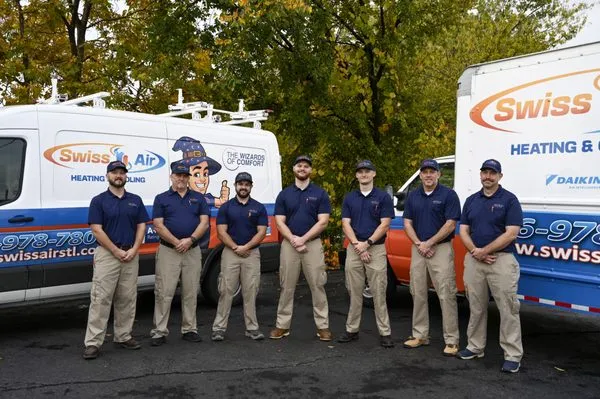
Swiss Air Heating & Cooling
Swiss Air Heating & Cooling has been a trusted HVAC contractor serving St. Charles and St. Louis counties since 1989, starting humbly as A&A Services. With an unwavering commitment to integrity and cl...

One Hour Heating and Air Conditioning
One Hour Heating and Air Conditioning in O'Fallon, MO, is a trusted local HVAC provider dedicated to keeping homes comfortable year-round. We understand that your time is valuable, which is why we pri...
Faszold Heating & Cooling
For over four decades, Faszold Heating & Cooling has been a trusted, family-owned name in O'Fallon and throughout St. Charles County. Founded in 1980 by Mike and Kathie Faszold, our business is built ...

Since our start in 1977, Autumn Air Company has been a trusted local presence for HVAC needs, first in North St. Louis County and now proudly based in O'Fallon, MO, where we've served St. Charles Coun...
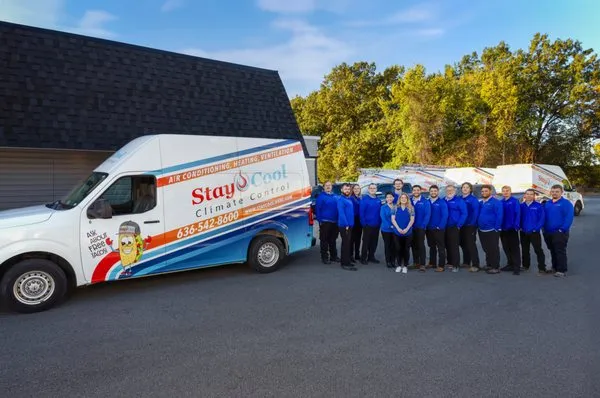
Stay Cool Climate Control
Stay Cool Climate Control is a family-owned and operated HVAC company proudly serving O'Fallon, MO, and the surrounding communities. Founded in 2018 by Jeremy Wolfe, the business grew from a lifelong ...
KirbnJays Heating & Cooling
For over 18 years, KirbnJays Heating & Cooling has been a trusted, family-owned HVAC provider for O’Fallon, MO. Founded and operated by Jason Green, our mission is to treat every customer like family,...

Hoff Heating & AC is a family-owned HVAC company serving O'fallon and the St. Charles area since 1983. They specialize in installing, repairing, and maintaining heating, air conditioning, and geotherm...
Academy Air Heating, Cooling, Plumbing and Electric
Academy Air Heating, Cooling, Plumbing and Electric is a family-owned home services provider proudly serving Hazelwood and the greater St. Louis area. Founded by Terry Silverstein over 40 years ago, t...
Estimated HVAC Service Costs in Chesterfield, MO
Common Questions
With Chesterfield's ground-level ozone risk and May pollen peaks, what filtration upgrades make sense for my home?
Ground-level ozone and pollen require different filtration strategies—ozone benefits from activated carbon media while pollen needs mechanical filtration. Your existing galvanized sheet metal ductwork with external wrap can typically handle MERV-13 filters without static pressure issues if the system was properly sized. However, adding a 5-inch media cabinet provides better airflow than standard 1-inch filters. For Chesterfield's specific air quality challenges, consider a two-stage approach: MERV-13 for particulate capture during pollen season, with optional carbon panels during high-ozone periods to adsorb gaseous pollutants without restricting airflow.
What does the 14.3 SEER2 minimum requirement mean for my Chesterfield home's new AC installation?
The 14.3 SEER2 federal minimum effective January 2023 represents a 10% efficiency improvement over previous standards when accounting for real-world installation factors. For Chesterfield homeowners paying 13 cents per kWh, upgrading from a 10 SEER system to a 16 SEER2 unit typically saves $300-400 annually on cooling costs. The Inflation Reduction Act's HEEHRA rebates provide up to $8,000 for qualified high-efficiency installations, making premium 18-20 SEER2 systems financially accessible. These rebates effectively reduce the payback period for efficiency upgrades to 3-5 years in our climate.
Our AC just stopped cooling during a hot afternoon in Chesterfield Valley. How quickly can a technician arrive?
From our service center near Chesterfield Central Park, we can dispatch a technician within 10-15 minutes via I-64/US-40. This major highway provides direct access to Chesterfield Valley neighborhoods without the traffic delays common on local roads. We keep diagnostic equipment and common replacement parts pre-loaded in service vehicles specifically for these emergency no-cool calls. The technician will first check for simple issues like tripped breakers or clogged condensate drains before moving to refrigerant pressure and compressor diagnostics.
My Ecobee thermostat just showed an E160 error code. What does this mean for my Chesterfield HVAC system?
The Ecobee E160 code indicates a communication failure between your thermostat and HVAC equipment, specifically loss of the 'C' (common) wire power connection. In Chesterfield homes, this often results from corroded connections in the outdoor condenser unit due to our humid climate, or from animals chewing low-voltage wiring in attics. The technician will first check the 24V transformer at the air handler, then trace the low-voltage wiring through the conduit to the condenser. Since this error prevents normal system operation, it requires prompt attention—delayed diagnosis can lead to compressor damage from repeated startup attempts without proper control signals.
What permits and safety standards apply to installing a new R-454B system in Chesterfield?
All Chesterfield HVAC installations require a mechanical permit from the City of Chesterfield Building Division, with inspections covering refrigerant line integrity, electrical connections, and combustion safety for gas equipment. Since 2025, R-454B installations must comply with updated A2L safety standards including leak detection systems, service valves with low-loss fittings, and equipment room ventilation calculations. Technicians need EPA Section 608 certification with specific A2L endorsement, and the system must be registered with the manufacturer for warranty validation. These requirements ensure safe handling of the mildly flammable refrigerant while maximizing system performance and longevity.
Should I consider switching from gas heat to a heat pump in Chesterfield given our winter temperatures?
Chesterfield's winter lows around 20°F make modern cold-climate heat pumps technically viable, especially with the 14:00-19:00 utility peak hours when electricity demand spikes. The latest inverter-driven models maintain 100% heating capacity down to 5°F and continue operating at reduced capacity to -13°F. However, the economic case depends on your gas versus electricity rates and the $8,000 HEEHRA rebate for qualified installations. A hybrid system—heat pump for moderate temperatures with gas backup for extreme cold—often provides optimal comfort and efficiency while leveraging Chesterfield's existing gas infrastructure during peak demand periods.
My Chesterfield home's AC seems to be struggling more each summer. Could its age be the main factor?
A typical Chesterfield home built around 1982 likely has a 44-year-old HVAC system, which is well beyond its expected 15-20 year lifespan. These older units in humid continental climates are particularly vulnerable to condenser coil corrosion. The combination of seasonal humidity, airborne debris from Chesterfield Valley's vegetation, and decades of thermal cycling creates pitting and leaks in the aluminum fins. This corrosion reduces heat transfer efficiency, causing the compressor to work harder and increasing energy consumption by 20-30% compared to modern systems.
How does Chesterfield's summer heat affect AC performance compared to the system's design temperature?
Chesterfield's summer highs regularly reach the mid-90s, approaching the 92°F design temperature used for system sizing. When outdoor temperatures exceed design conditions, even properly sized systems lose capacity—typically 1-2% per degree above design. The R-454B refrigerant in modern systems maintains better performance at high temperatures than older R-410A, with approximately 5% higher capacity at 95°F. However, during extreme heat events, all systems experience reduced efficiency and may struggle to maintain indoor setpoints below 75°F without supplemental strategies like zoning or thermal curtains.
