
Top Emergency HVAC Services in Clever, MO, 65631 | Compare & Call


Down Home Heating & Air is your Clever-based heating and cooling partner, serving our friends and neighbors throughout Nixa, Springfield, Monett, Branson, and Republic. We build our business on knowin...
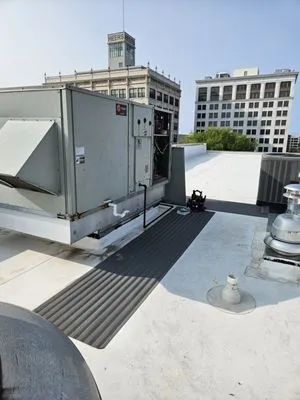
Crow Heat & Air is your trusted, locally-owned HVAC and water heater specialist in Clever, MO. We understand the specific challenges our neighbors face, such as outdoor fan motor and air handler fan f...

Daniel Carpenter Services
Daniel Carpenter Services is a Clever-based, family-rooted business providing essential tree care, plumbing, and HVAC solutions. Starting in 2013 with a simple mission to help his grandparents heat th...
Frequently Asked Questions
My air conditioner stopped on a hot day near Clever High School. How fast can a technician arrive?
Technicians servicing the Clever City Center area are typically staged near MO-14 for efficient dispatch. From there, travel to a home near the high school is a consistent 5-10 minute drive. For a no-cool emergency, the first diagnostic steps over the phone often involve checking the thermostat and circuit breaker, allowing the technician to arrive prepared with the most likely parts, like a replacement capacitor.
My Ecobee thermostat is showing an E1 error code. What does that mean?
An Ecobee E1 alert indicates the thermostat is not detecting voltage from your HVAC system's equipment. In Clever, this commonly points to a safety switch tripping, a blown low-voltage fuse, or a failed control board. Given the area's humidity profile, corrosion on electrical connections is a frequent culprit. This error requires a professional diagnosis to trace the circuit interruption and prevent potential damage to the compressor or other components.
What are the permit and safety rules for a new AC installation now?
All HVAC replacements in Clever require a permit from the Christian County Building and Zoning Department. As of 2026, new systems using A2L refrigerants like R-454B must comply with updated safety standards (UL 60335-2-40). These rules mandate specific leak detectors, updated service practices, and equipment labeling. Hiring a contractor familiar with these 2026 codes is essential for a lawful and safe installation that also qualifies for available rebates.
Can my current ducts handle a better air filter for ozone and pollen?
Your existing galvanized sheet metal and fiberglass duct board system generally has good integrity for upgraded filtration. However, installing a high-MERV filter, like a MERV-13 for April pollen and ozone, increases static pressure. A technician should measure your system's static pressure to ensure the blower motor can handle the restriction without reducing airflow or causing premature failure.
Why does my AC struggle when it gets above 93 degrees?
Local HVAC systems are engineered to a 93°F design temperature, representing the peak outdoor condition they are sized to handle efficiently. When temperatures exceed this, the system runs continuously to try to meet the load, reducing its delta T (temperature drop) and dehumidification capacity. Modern R-454B refrigerant maintains better pressure and efficiency in these high-heat conditions compared to older R-410A, but continuous operation above design limits is still expected.
My HVAC system is original to my 2004 house. What should I expect?
A 22-year-old system in Clever is past its typical service life. Units from this era often have galvanized sheet metal ductwork, which is durable, but the mechanical components are prone to failure. The humid continental climate accelerates capacitor corrosion, a common failure point, as moisture interacts with electrical contacts. Proactive replacement of aging parts is advised to prevent a complete system shutdown during peak demand.
What does the new 14.3 SEER2 minimum mean for my electricity bill?
The 2026 SEER2 standard ensures new systems use about 15% less energy than older 13 SEER models. At Clever's average rate of $0.11 per kWh, a properly sized 3-ton unit meeting this standard creates meaningful savings. The federal Inflation Reduction Act rebates, with an $8,000 cap, can significantly offset the upfront cost of these high-efficiency models, improving the long-term return on investment.
Is switching from my gas furnace to a heat pump a good idea here?
For Clever's climate, a cold-climate heat pump can effectively handle heating down to our winter lows. The economics depend on your gas versus electricity rates and the 4-7 pm utility peak hours. A dual-fuel system, which pairs a heat pump with your existing gas furnace as a backup, is often the optimal transition. It uses the efficient heat pump for moderate weather and switches to gas during the coldest periods or peak electricity times, maximizing savings and comfort.
