
Top Emergency HVAC Services in Scottsbluff, NE, 69361 | Compare & Call

Best Plumbing, Heating & Cooling
Best Plumbing, Heating & Cooling is a family-owned and operated business serving Scottsbluff and the Western Nebraska Panhandle for over 30 years. We understand that a well-functioning home relies on ...

Independent Plumbing & Heating
For over 90 years, Independent Plumbing & Heating Inc. has been the trusted provider for home comfort in Scottsbluff, Gering, and across the Western Nebraska Panhandle. As a family-owned and operated ...

Oregon Trail Plumbing Heating & Cooling
Oregon Trail Plumbing Heating & Cooling Inc. is a locally owned and operated company dedicated to providing reliable service for the homes and businesses of Scottsbluff and the surrounding area. We un...
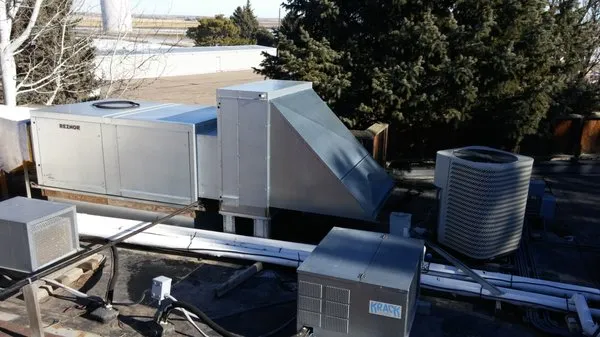
Polar Express Hvac/R is your trusted, full-service home comfort and appliance expert in Scottsbluff, NE. We specialize in solving the HVAC and appliance problems common to our region, from refrigerant...
Precision Air is a trusted local HVAC expert in Scottsbluff, NE, dedicated to keeping homes comfortable and efficient year-round. We understand the common challenges in our area, like unexpected air h...
Fraass Heating & Cooling is your trusted local HVAC expert in Scottsbluff, Nebraska. We specialize in addressing the common comfort and air quality challenges faced by homeowners in our region, partic...

CST Mechanical Inc.
Founded in 2009 by a group of four local tradesmen with over 50 years of combined experience, CST Mechanical Inc. brings deep-rooted expertise to Scottsbluff. The team, led by Ric, has a background sp...
Airmaxx Heating & Cooling is a trusted local HVAC contractor serving Scottsbluff and the surrounding communities. We specialize in diagnosing and fixing common local HVAC problems like air conditioner...
All-Temp Service & Repair is your trusted, local HVAC specialist in Scottsbluff, NE. We understand the unique demands of our Panhandle climate, where intense summer heat can push air conditioning syst...
Lumber 1 Construction
Lumber 1 Construction LLC is your single-source solution for construction needs in Scottsbluff, NE. As a full-service general contractor, we manage everything from major projects like new home constru...
FAQs
Why does my AC struggle when temperatures hit the mid-90s?
Scottsbluff's HVAC systems are engineered for a 92°F design temperature based on historical weather data. When actual temperatures exceed this limit, systems operate continuously but cannot maintain the desired indoor temperature. Modern R-454B refrigerant maintains better efficiency at these higher temperatures compared to older R-410A, but all systems experience reduced capacity during extreme heat events above their design parameters.
What does the new 13.4 SEER2 minimum mean for my electricity bill?
The 2026 SEER2 standard requires new systems to be 8-10% more efficient than previous models. At Scottsbluff's 11¢/kWh rate, upgrading a 3-ton system from SEER 13 to SEER2 16 saves about $180 annually. The Inflation Reduction Act's HEEHRA rebate provides up to $8,000 toward qualifying high-efficiency installations, making the payback period significantly shorter for homeowners replacing aging equipment.
Can my home's duct system handle better air filters for wildfire smoke and spring pollen?
Original galvanized steel ductwork in Scottsbluff homes typically handles MERV-8 filters without static pressure issues. Upgrading to MERV-13 for PM2.5 wildfire smoke and May pollen peaks requires measurement first. High-efficiency filters increase airflow resistance by 30-50%, potentially overwhelming older blower motors. A static pressure test determines if your duct system can accommodate better filtration or needs modifications.
What permits and safety standards apply to new AC installations in 2026?
All Scottsbluff HVAC installations require permits from the City Building and Planning Department. For R-454B refrigerant systems, 2026 standards mandate leak detection systems, service port caps, and specific room size requirements due to A2L classification. Technicians must hold EPA 608 certification with A2L-specific training. These regulations ensure safe handling of mildly flammable refrigerants while maintaining system efficiency and reliability.
My air conditioner keeps freezing up. Is this just normal wear for Scottsbluff homes?
With an average home age of 61 years, many Scottsbluff systems are operating well beyond their 15-20 year design life. Older units develop refrigerant leaks and airflow restrictions over time. In our semi-arid climate, these issues cause evaporator coil temperatures to drop below freezing, forming ice that blocks airflow and stops cooling. This frozen evaporator coil failure is a classic symptom of aging equipment needing evaluation.
Should I consider switching from gas heat to a heat pump in Scottsbluff?
Modern cold-climate heat pumps operate efficiently down to -15°F, making them viable for Scottsbluff's winters. The NPPD EnergyWise program offers $1,500 rebates for qualified installations. Schedule heat pump operation to avoid the 4-8 PM utility peak hours when electricity rates are highest. A dual-fuel system combining a heat pump with your existing gas furnace provides optimal efficiency across all temperature ranges.
Our AC stopped working during a hot afternoon in Highland Park. How quickly can someone get here?
From our shop near Scotts Bluff National Monument, we dispatch technicians via US-26 directly to Highland Park. This routing avoids downtown traffic, ensuring a 10-15 minute arrival for emergency no-cool calls. We prioritize these dispatches during heat events when indoor temperatures can rise rapidly, especially in homes with original 1965-era insulation.
My Ecobee thermostat shows an E1 error code. What does this mean?
The Ecobee E1 alert indicates a refrigerant pressure issue, often signaling low charge or airflow restriction. In Scottsbluff's semi-arid climate, this frequently points to small refrigerant leaks that develop over time in older systems. This specific error helps prevent compressor damage by shutting down the system before pressures reach critical levels. Addressing E1 alerts promptly can prevent more expensive repairs like compressor failure.
