
Top Emergency HVAC Services in Hudson, NH, 03051 | Compare & Call

D & R Plumbing Heating & Air Conditioning
D & R Plumbing Heating & Air Conditioning has been a trusted provider of comprehensive plumbing and HVAC services in Central and Southern New Hampshire since 1997. With over 30 years of combined exper...
Temperature By Design is a Hudson-based HVAC/R service provider founded in 2007 by owner and lead technician John. With nearly four decades of experience since trade school in 1985, John has worked on...
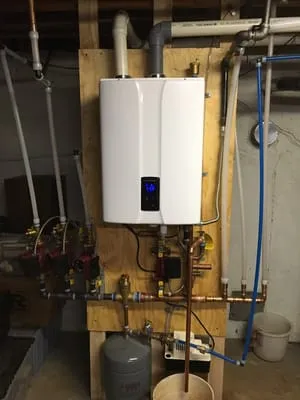
3 Brothers Mechanical
Founded in 2014 by Eric Harrison, 3 Brothers Mechanical has grown from a vision of reliability and respect into a trusted name for plumbing, heating, and air conditioning across New Hampshire and Mass...
Modern Home Heating and Cooling is a trusted local HVAC contractor serving Hudson, NH, and surrounding communities. We specialize in the installation, repair, and maintenance of heating and cooling sy...
Mold Removal NH provides essential mold remediation and damage restoration services to Hudson and the wider Hillsborough County area, including Goffstown, Mont Vernon, Amherst, Bedford, and Milford. A...
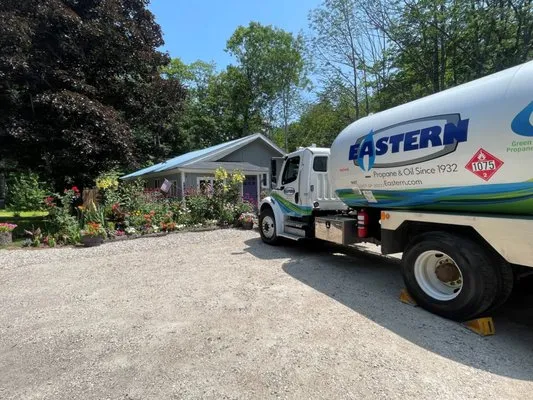
Eastern Propane & Oil in Hudson, NH, is a family-owned energy provider that has served New England since 1932. Starting as a hardware store's side business selling bottled gas, the company has grown i...

Michael Vaughn Plumbing and HVAC is a locally owned and operated residential contractor serving the Hudson, NH area for over a decade. As a fully licensed and insured professional, Michael Vaughn brin...
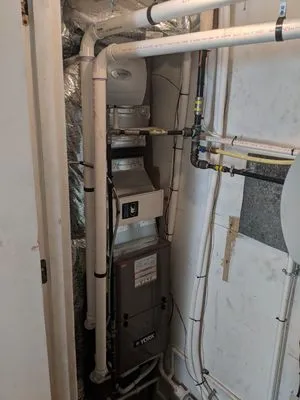
Ashton HVAC is a locally owned and operated heating and air conditioning company serving Hudson, NH, and surrounding areas. Founded by Nathan, a licensed and insured HVAC professional with over 19 yea...
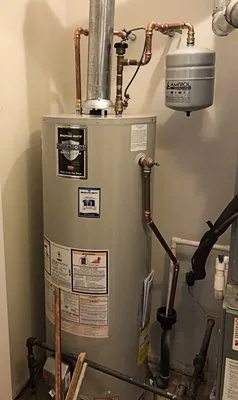
K O Pro Plumbing & HVAC/R
K O Pro Plumbing & HVAC/R is your trusted local expert in Hudson, NH, providing comprehensive plumbing, water heater, and HVAC services. We specialize in addressing common Hudson-area HVAC issues like...
Family Mans HVAC is a veteran-owned family business serving Hudson, NH, and the surrounding communities. We understand that heating and cooling issues can disrupt your home's comfort and safety, which...
Common Questions
Is switching from my natural gas furnace to a heat pump a practical choice for Hudson winters?
Modern cold-climate heat pumps are engineered for New Hampshire winters and can efficiently heat homes down to near 0°F. The economics depend on your natural gas rate versus the $0.26/kWh electricity cost, especially during Eversource's peak hours from 2 PM to 7 PM. Utilizing the NHSaves rebates of $1,000-$2,000 for a dual-fuel system that pairs a heat pump with your existing gas furnace often provides the optimal balance of comfort and cost for Hudson.
How well will a new air conditioner handle our hottest summer days?
Hudson's summer highs can exceed the standard 88°F design temperature the system is rated for. During these peaks, capacity drops and the unit must run longer to maintain temperature. The newer R-454B refrigerant, now standard, offers slightly better high-temperature performance and lower global warming potential than the older R-410A, providing more stable cooling during our occasional extreme heat.
What does the new 15.2 SEER2 minimum efficiency standard mean for my electricity bill?
The 15.2 SEER2 mandate for 2026 ensures new systems use at least 15% less energy than older models. At Hudson's average rate of $0.26 per kWh, this reduction directly lowers operating costs. Pairing a high-SEER2 unit with the active HEEHRA rebate, which has an $8,000 cap, can offset a substantial portion of the upgrade investment through both upfront savings and long-term efficiency.
If my AC stops working on a hot day near Robinson Pond, how quickly can a technician arrive?
A no-cool emergency in the Hudson Center area typically sees a 12-18 minute dispatch. Our service routing from the Everett Turnpike allows for direct access to neighborhoods around Robinson Pond, minimizing delays. We prioritize these calls to restore cooling before indoor temperatures rise significantly.
Can my home's existing ductwork support better air filters for pollen and smoke?
Your galvanized steel ducts with fiberglass wrap provide a solid base, but adding a high-efficiency MERV-13 filter requires a static pressure check. In Hudson, where May pollen peaks and wildfire smoke brings PM2.5, a MERV-13 filter is ideal for capturing these particles. However, an older blower motor may struggle; a technician should measure static pressure to ensure your system can handle the added restriction without losing airflow.
My Ecobee thermostat is showing an 'E1' alert. What does this mean for my system?
An Ecobee E1 code signals the thermostat is not detecting a call for cooling or heating from your HVAC equipment. In Hudson, this often points to a safety lockout on the control board, frequently triggered by a frozen evaporator coil or a faulty pressure switch—common issues in older systems. This alert prevents compressor damage and requires a technician to diagnose the root cause, such as low refrigerant or a dirty filter, before resetting.
What are the permitting and safety requirements for a new AC installation in Hudson?
All installations require a permit from the Town of Hudson Building Department. As of 2026, systems using A2L refrigerants like R-454B must comply with updated safety standards (UL 60335-2-40), which mandate leak detection, updated pipe sizing, and specific room volume calculations due to the refrigerant's mild flammability. A licensed technician will handle this documentation to ensure your system is safe, legal, and compliant with all current codes.
My Hudson home's AC seems to struggle. Could the unit's age be the main factor?
The average age of a central system in a home from 1971 is about 55 years, well past the typical 15-year service life. In Hudson's humid climate, the older refrigerants and materials in these units are particularly susceptible to the condensate line freezing and ice damming in the evaporator coil. This happens because aged components operate less efficiently, causing the coil to drop below freezing and trap moisture.
