
Top Emergency HVAC Services in Bosque Farms, NM, 87068 | Compare & Call

There are 143 hvac companies server in Bosque Farms NM
Duke City Heating & Cooling
Duke City Heating & Cooling is a family-owned HVAC, electrical, and plumbing company serving Albuquerque since 2005. Founded by brothers Paul and Mike, who grew up learning the trade at their grandfat...
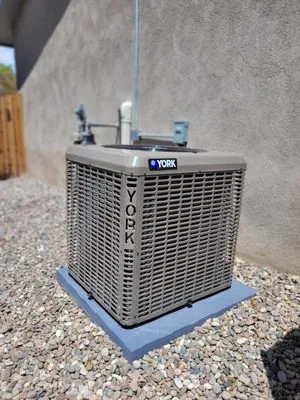
AC Reliable is a locally owned and operated family HVAC business serving Albuquerque and surrounding areas. We provide reliable, trustworthy heating, cooling, and water heater services for residential...
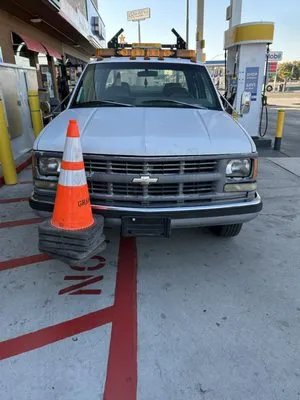
Genesis Design Mechanical is a trusted HVAC and plumbing service provider serving Los Lunas and the greater Albuquerque metro area since 2018. We specialize in comprehensive heating, cooling, and plum...
K&R Heating and Cooling is a trusted HVAC company serving Albuquerque, NM, specializing in heating and air conditioning solutions. We provide expert HVAC installation, repair, and maintenance to keep ...
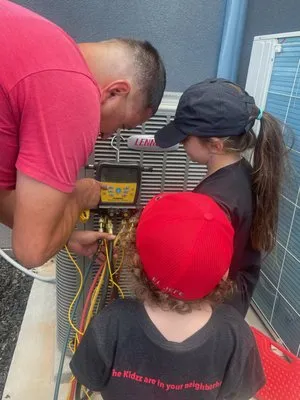
Chad Redford, one of the owners of Kidzz Mechanical, brings over 25 years of HVAC experience to Albuquerque. Starting from sweeping parking lots to becoming a master technician, Chad's journey reflect...
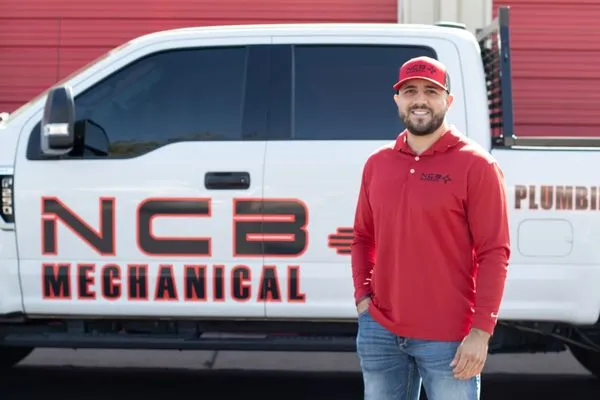
NCB Mechanical is a locally owned and licensed HVAC and plumbing contractor serving Albuquerque and the surrounding communities. Our technicians provide a wide range of residential services, from emer...
Number One Plumbing, AC, Solar & Electric
Number One Plumbing, AC, Solar & Electric has been a trusted local name in Albuquerque since 2005. Founded by contractor David, who brought over nine years of journeyman experience to the business, th...
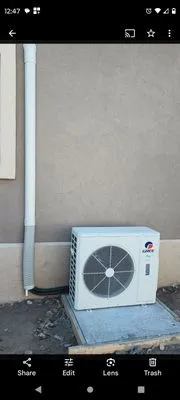
Michaels Cooling and Heating
Michaels Cooling and Heating is a trusted HVAC and water heater service provider serving Albuquerque, NM, and surrounding communities including Rio Rancho, Los Lunas, Santa Fe, and Belen. Founded in A...
BakerHouse Service Co is a family-operated, American-owned HVAC/R contractor serving Albuquerque and all of New Mexico. Founded by second-generation technician Danial Baker, who began learning the tra...

Robert Wilson Plumbing Heating & Air Conditioning
For over [Number] years, Robert Wilson Plumbing Heating & Air Conditioning has been a trusted, locally-owned provider serving Albuquerque and surrounding communities. We understand the unique demands ...
Estimated HVAC Service Costs in Bosque Farms, NM
FAQs
Does it make sense to switch from my gas furnace to a heat pump here?
Given our winter lows and PNM's peak electricity rates from 4 to 8 PM, a dual-fuel system is often the optimal solution. This configuration uses a high-efficiency heat pump for moderate heating and the existing gas furnace as backup during the coldest nights and peak rate periods. This maximizes the use of the heat pump's efficiency while leveraging the lower-cost gas during times when electric resistance heat would be prohibitively expensive to run.
Can my existing ductwork handle a high-efficiency air filter for wildfire smoke and pollen?
Your galvanized sheet metal ducts are robust, but the external fiberglass wrap can sometimes mask minor leaks. Installing a MERV-13 filter for April pollen and wildfire PM2.5 increases static pressure. A technician should measure your system's static pressure to ensure the blower motor isn't overworked. Many older systems require a filter cabinet retrofit or duct sealing to handle MERV-13 without reducing airflow and causing the evaporator coil to freeze.
My Ecobee thermostat is showing an 'E1' alert. What does that mean for my system?
An Ecobee E1 code signals the thermostat is not detecting a call for cooling from your equipment. In Bosque Farms, this often points to a failed control board, a blown low-voltage fuse from a contactor sticking in the outdoor unit, or a safety switch like the float switch in the condensate line being triggered. Dust accumulation on electrical components is a common contributor here, and this alert allows for service before a complete system shutdown on a hot day.
Why does my AC struggle when it's over 94 degrees outside?
Your system was designed for a 94°F outdoor temperature, which is the local design temp used for Manual J load calculations. On days exceeding that, such as during regional heatwaves, the system runs continuously to try to maintain setpoint. Modern units using R-454B refrigerant maintain better capacity and efficiency at these higher temperatures compared to older R-22 or R-410A systems, but a design limit remains for all equipment.
What are the permit and safety rules for a new AC installation in 2026?
All installations in the Village of Bosque Farms require a permit from the Building Department. For systems using the new A2L refrigerants like R-454B, which are mildly flammable, 2026 codes mandate specific safety protocols. These include updated leak detection systems, revised clearance requirements for equipment, and specialized technician certification. Proper permitting ensures the installation meets these updated safety standards for refrigerant handling and electrical connections.
Is the new 14.3 SEER2 minimum efficiency standard worth the upgrade cost?
The 2026 SEER2 standard ensures new systems use significantly less electricity than older models. With PNM rates at 14 cents per kWh, a modern 16 SEER2 unit can save a Bosque Farms home hundreds annually. The federal HEEHRA rebates, capped at $8,000 for qualified heat pump installations, directly offset the higher upfront cost of these efficient systems, making the long-term operational savings immediately accessible.
What if my AC quits on a hot afternoon in Bosque Farms Estates?
A no-cool emergency during peak heat requires a technician familiar with local dispatch. Our service vehicles are routed from near the Bosque Farms Village Hall, using NM-47 for direct access throughout the community. This allows for a consistent 5 to 10 minute on-site response to begin diagnostics, which is critical for preventing heat buildup in the home and protecting the compressor from damage due to extended high-pressure operation.
How old are most HVAC units in Bosque Farms, and what problems does that age bring?
A typical system here dates to the early 1980s, making it approximately 45 years old. This age coincides with the expected lifespan of the original evaporator coil. In our arid climate with hard water, 45 years of mineral-laden condensation and airborne dust leads to significant internal scaling on the coil fins. This scaling acts as an insulator, drastically reducing heat transfer and system efficiency, which often manifests as poor cooling and high energy bills before a complete failure.
