
Top Emergency HVAC Services in Clifton Park, NY, 12019 | Compare & Call

Grasshopper Heating and Cooling
Grasshopper Heating and Cooling is a trusted HVAC service provider serving Clifton Park, NY, and surrounding areas. Since 2016, we have specialized in heating and air conditioning solutions for reside...
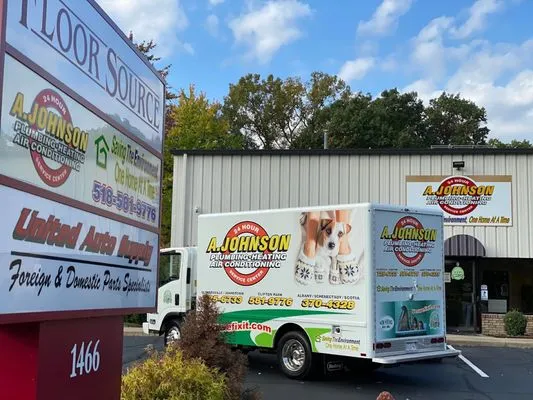
A. Johnson Plumbing and Heating
A. Johnson Plumbing and Heating has been a trusted, family-owned business serving Clifton Park and the greater Saratoga Springs region since 1982. For over 40 years, we've built our reputation on reli...
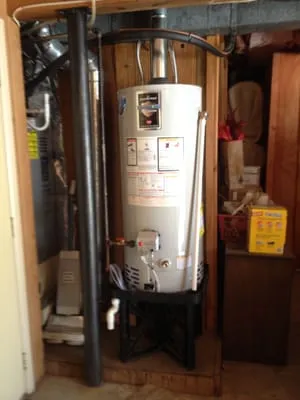
Russell Heating & Cooling
Since 1980, Russell Heating & Cooling has been a trusted name for home comfort in the Capital Region. After moving our base to Clifton Park in 1984, we've proudly served local families and businesses ...
Northeast HVAC Solutions in Clifton Park, NY, is a specialized HVAC manufacturer's representative with deep roots in the commercial and industrial sector, established in 1938. We operate as a vital li...
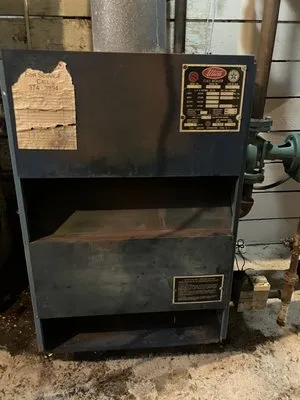
For over 30 years, Lucas Heating & Refrigeration has been the trusted local HVAC expert for Clifton Park, NY, and the surrounding Capital Region. Our commitment is to provide reliable, expert service ...

Mike's Portables
Serving Clifton Park and the surrounding Capital Region, Mike's Portables is your trusted local partner for essential home and jobsite services. We specialize in portable toilet rentals for constructi...
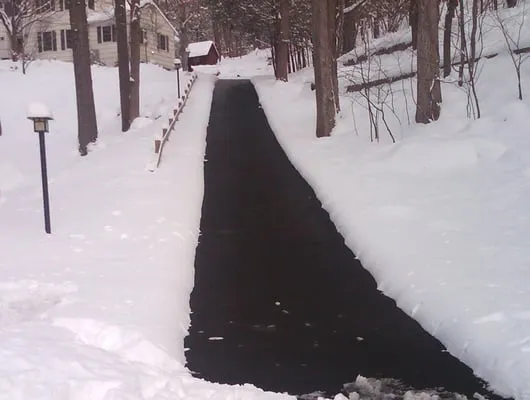
Comfort Radiant Heating is a locally-owned, specialized HVAC business in Clifton Park, NY, founded in 2005 by Russell. The company was born from a personal need when Russell couldn't find a local inst...

Moe's And Sons Construction
Moe's And Sons Construction is a trusted, family-owned contractor serving Clifton Park, NY, specializing in heating & air conditioning (HVAC), flooring, and general construction. We understand the loc...
HOME AIR SOLUTIONS is your trusted local HVAC partner in Clifton Park, NY. We understand the common challenges faced by area homeowners, like rising energy costs and aging heating and cooling systems....
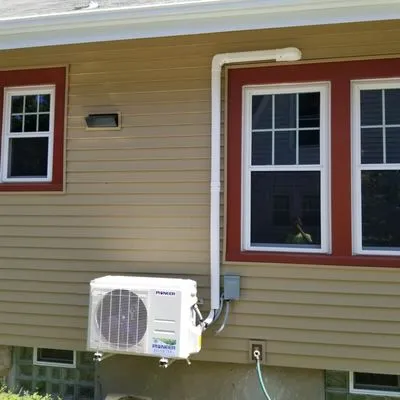
ALBANY HVAC is a trusted heating, air conditioning, and plumbing company serving Clifton Park, NY, and the surrounding Capital Region. We specialize in professional HVAC installation and replacement, ...
FAQs
What permits and safety standards apply to new HVAC installations?
All Clifton Park installations require permits from the Town of Clifton Park Building Department. Since January 2023, R-454B and other A2L refrigerants mandate special handling: leak detection systems every 10 pounds of charge, service ports with unique fittings, and equipment room ventilation calculations. Technicians need EPA Section 608 certification with A2L endorsement. These standards address the mild flammability of new refrigerants while maintaining their environmental benefits over phased-out R-410A.
What happens if my Country Knolls home loses cooling during a heatwave?
Emergency no-cool calls receive priority dispatch from our Clifton Common service center. Technicians take I-87 to Exit 9, reaching most Country Knolls addresses within 10-15 minutes. We carry R-454B refrigerant and common replacement components on service vehicles. For heat-related emergencies, we maintain extended evening hours through the cooling season to address compressor failures or refrigerant leaks immediately.
Should I consider switching from natural gas to a heat pump in Clifton Park?
Heat pumps now operate efficiently down to -5°F, making them viable for Clifton Park's winter lows. During utility peak hours (2-7 PM), heat pumps use 30-50% less energy than resistance heating. The HEEHRA rebate covers heat pump installations, and dual-fuel systems can maintain natural gas backup for extreme cold. We analyze your specific fuel costs and existing ductwork to determine payback periods, typically 5-8 years with current incentives.
How well do modern systems handle Clifton Park's hottest summer days?
Local design temperature is 87°F, though summer highs occasionally reach 95°F. This 8-degree buffer requires proper sizing via Manual J calculation—typically 2.5-3.0 tons for Clifton Park homes. R-454B refrigerant maintains stable pressure-temperature relationships up to 120°F ambient, with 10-12% better heat transfer than older R-410A. Oversized units short-cycle in humid conditions, while undersized systems struggle during peak heat events.
Can my existing ductwork handle better air filtration for pollen and wildfire smoke?
Galvanized sheet metal with external wrap generally supports MERV-13 filters without static pressure issues, provided duct sizing was originally correct. During May pollen peaks and wildfire PM2.5 events, MERV-13 captures 85% of particles 1-3 microns in size. We recommend checking static pressure after installation; most 1980s Clifton Park homes show acceptable 0.4-0.6 in w.c. readings with proper filter selection.
How do the 2026 SEER2 standards affect my utility bills?
New York now requires minimum 14.3 SEER2 efficiency for all installations. At Clifton Park's $0.14 per kWh rate, upgrading from a 10 SEER system to 16 SEER2 typically saves $300-400 annually. The Inflation Reduction Act provides up to $8,000 in HEEHRA rebates for qualifying high-efficiency systems. Combined with National Grid's $1,000 HVAC rebate, most homeowners recover 40-60% of their investment through incentives alone.
Why do so many Clifton Park AC systems have condensate line issues during spring and fall?
The average home in Clifton Park was built around 1984, making many HVAC systems approximately 42 years old. Galvanized sheet metal ductwork from that era often develops micro-cracks and corrosion at joints, allowing humid air infiltration. During shoulder seasons when temperatures fluctuate between 40-60°F, this moisture condenses and freezes in drain lines, creating blockages. Older systems lack modern condensate safety switches, so homeowners typically notice only when water damage occurs.
What does an Ecobee E13 alert mean for my Clifton Park HVAC system?
Ecobee E13 indicates the thermostat isn't detecting adequate temperature change after 5 minutes of runtime. In Clifton Park homes, this often signals low refrigerant charge due to micro-leaks in older systems, restricted airflow from dirty coils, or failing capacitors. The alert prevents compressor damage by stopping short-cycling. We check delta T across the evaporator coil and static pressure in ductwork to diagnose whether the issue is refrigerant-related or airflow-based.
