
Top Emergency HVAC Services in Alva, OK, 73717 | Compare & Call


Greydog Mechanical is Alva's trusted heating and air conditioning specialist. Serving homeowners throughout Northwest Oklahoma, we understand the common frustrations caused by the region's climate, li...
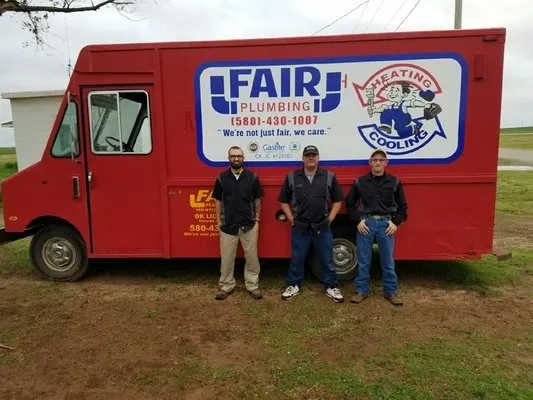
Fair Plumbing in Alva, OK, is a trusted local plumbing and HVAC service owned and operated by Ted Detgen. With over a decade of experience, Ted initially worked under his father's license before becom...
Q&A
Why does my AC struggle when it's over 100°F, even if it's newer?
HVAC systems in Alva are engineered for a 98°F design temperature, based on local historical data. When ambient temperatures exceed this, the system's capacity to reject heat diminishes, reducing cooling output. Modern units using the new R-454B refrigerant maintain better performance and efficiency in these extreme conditions compared to older R-410A systems, but some capacity loss is inherent to the physics of heat exchange.
What should I do if my AC stops working during an Alva heatwave?
First, check your thermostat and circuit breaker. If the system is unresponsive, a technician can typically reach any home in Downtown Alva, from near Northwestern Oklahoma State University to areas off US-64, within 5-10 minutes. This quick dispatch is critical for diagnosing a failed capacitor or refrigerant leak before indoor temperatures become unsafe.
How old are most HVAC systems in Alva homes, and why is that a problem?
Homes in Downtown Alva average around 68 years old, meaning their original or early-replacement systems are often 20-30 years old. This age directly contributes to capacitor failure, a common issue here. The repeated, extreme heat cycles of our semi-arid climate degrade these electrical components faster, leading to sudden system shutdowns on the hottest days when you need cooling most.
Are new air conditioners in Oklahoma really more efficient, and is there financial help?
Federal law now mandates a minimum of 14.3 SEER2 for new systems, a significant jump from older units. At Alva's average rate of $0.11 per kWh, a modern system can cut cooling costs substantially. The active Inflation Reduction Act (HEEHRA) rebates, with an $8,000 cap, combined with a $250 OG&E Smart Hours rebate, can make a high-efficiency upgrade surprisingly affordable.
What are the rules for installing a new AC with the latest refrigerant?
All installations in Alva require a permit from the City of Alva Building and Zoning Department. As of 2026, systems using A2L refrigerants like R-454B, which are mildly flammable, must adhere to updated safety standards (UL 60335-2-40). This mandates specific leak detectors, revised service practices, and proper labeling, ensuring safe handling of the new standard refrigerant for our community.
Can my older home's HVAC system handle better air filters for our dust and pollen?
Alva's semi-arid climate brings a high risk of dust and particulate matter, with a pollen peak in May. While upgrading to a MERV-13 filter is ideal for capturing these particles, the existing galvanized sheet metal ductwork in many homes may not handle the increased static pressure. A technician should measure static pressure to ensure your blower motor can move enough air without straining or freezing the coil.
My Ecobee thermostat is showing an 'E1' alert. What does that mean here?
An Ecobee E1 error code signals the thermostat has lost communication with your HVAC equipment. In Alva, this often points to a power interruption at the indoor air handler or furnace. Given the age of many systems and the prevalence of capacitor failures due to heat stress, this alert can be an early indicator of a failing component that a technician should diagnose before a complete system failure occurs.
Should I consider switching from my gas furnace to a heat pump in Alva?
Given Alva's winter lows and the operational cost of gas, a modern cold-climate heat pump is a viable primary heating source. The key is selecting a unit rated for our specific climate zone. Pairing it with the OG&E Smart Hours program, which offers lower rates outside the 2 PM to 7 PM peak window, can optimize running costs, making the switch both technically sound and economically favorable.
