
Top Emergency HVAC Services in Tulsa, OK, 74008 | Compare & Call


Airco Service
Airco Service is a family-owned and operated HVAC, plumbing, and electrical company serving Tulsa since 1961. Founded by John R. and Louise Boyce, the business grew with their sons John C. and Tom joi...
ProThermal Heating and Cooling is a family-owned HVAC service provider serving Tulsa, Oklahoma, and the surrounding communities. Founded in 2019, the team brings over 20 years of combined experience t...
Evans Mechanical is a Tulsa-based HVAC and appliance service company founded in August 2018 by an owner with 16 years of hands-on experience in the field. Building on a solid foundation of long-term c...
Air Comfort Solutions
Air Comfort Solutions is a trusted local provider in Tulsa, OK, specializing in plumbing, heating & air conditioning/HVAC, and electrical services. Our team of friendly, knowledgeable professionals de...
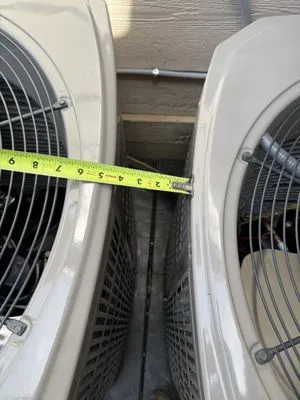
Hendrick Heat and Air is a trusted, family-owned HVAC and plumbing company with deep roots in the Tulsa community. For over three decades, our team has been dedicated to protecting your home—one of yo...
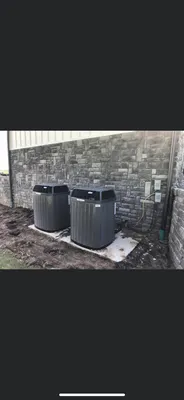
For over 50 years, Robison Air has been a trusted, locally-owned HVAC partner for homeowners and businesses across the Tulsa Metro area. We specialize in heating, air conditioning, and geothermal syst...
Midtown Tulsa Handyman & Plumbing Service
At Midtown Tulsa Handyman & Plumbing Service, we're a local team dedicated to making your life easier. Your emergency is our emergency, and we treat every customer like family. Our priority is ensurin...
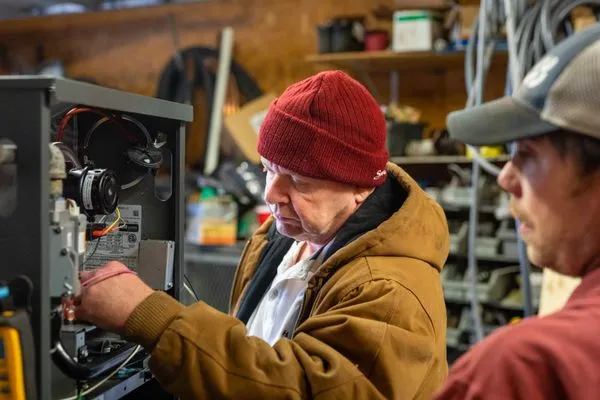
Brian's Heat and Air
Brian's Heat and Air is a locally owned and operated HVAC company serving Tulsa and Broken Arrow since 1991. Founded by Brian, a Tulsa native who attended Will Rogers High School and studied HVAC at T...
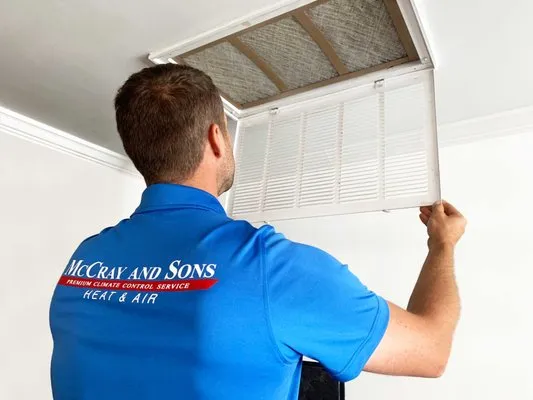
McCray and Sons Heat & Air
For generations, the McCray family has been proud to call Oklahoma home. At McCray and Sons Heat & Air, that local pride translates into reliable service you can trust. Owner Eric McCray personally ov...

Air Masters Inc. is a family-owned and operated HVAC company serving Tulsa, Oklahoma, and surrounding states since 1997. With over 26 years of experience, we specialize in residential and commercial h...
FAQs
How long do HVAC systems in Tulsa homes usually last?
The average Tulsa home was built in 1972, meaning original or replacement systems can now be 20-30 years old. In our humid continental climate, this age directly contributes to the primary failure point of condenser coil corrosion. Seasonal storms bring moisture and airborne contaminants, while the constant high humidity accelerates the oxidation process, especially on older aluminum fins. A system this age is often operating well below its original efficiency and reliability.
Why does my air conditioner struggle on the hottest Tulsa afternoons?
System design temperature is a fixed engineering parameter, and in Tulsa, it's 98°F. When ambient temperatures exceed this, as they often do, the system's capacity to remove heat diminishes. The refrigerant charge and coil surfaces cannot reject heat as effectively, leading to reduced cooling and potential continuous operation. Modern R-454B refrigerant, now standard, is formulated to maintain slightly better performance and stability in these high-temperature conditions compared to older refrigerants.
Can my home's ductwork support better air filters for Tulsa's ozone and pollen?
Tulsa's spring pollen peak and summer ozone risk make advanced filtration valuable. Your existing galvanized sheet metal ductwork with external fiberglass wrap is generally robust enough to handle a MERV-13 filter, which captures fine particulates. However, installing such a filter without assessing static pressure can restrict airflow. A technician should measure system static pressure to ensure the blower motor isn't overworked, which protects efficiency and equipment life.
Should I consider switching from my gas furnace to a heat pump?
For Tulsa homes, a dual-fuel system using a heat pump with a gas furnace as backup is often optimal. A modern cold-climate heat pump can efficiently handle heating down to our winter lows, saving significantly during the milder shoulder seasons and off-peak hours. The gas furnace then provides reliable, cost-effective heat during the coldest nights and the utility peak hours from 14:00 to 19:00, ensuring comfort and managing operating costs effectively.
My Ecobee thermostat is showing an E1 alert. What does this mean?
An Ecobee E1 alert indicates the thermostat has lost communication with your HVAC equipment. In Tulsa, this is commonly caused by a safety lockout on the outdoor unit due to a fault, such as a pressure switch trip or condenser coil corrosion triggering a high-pressure cutout. It can also signal a blown low-voltage fuse in the air handler. This specific code requires a technician to diagnose the root cause at the equipment, not just the thermostat.
Is there a new efficiency standard for air conditioners in 2026?
Federal minimum standards now require new central air conditioners to meet a 14.3 SEER2 rating. For Tulsa homeowners, pairing a high-SEER2 system with the active Inflation Reduction Act rebates, which have an $8,000 cap, creates a strong economic case. At the local utility rate of $0.11 per kWh, the operational savings from a modern unit can be significant, and the PSO $500 efficiency rebate provides additional upfront cost reduction.
What are the permit and safety requirements for a new AC installation in Tulsa?
All HVAC replacements in Tulsa require a permit from the City of Tulsa Planning and Development Department. Since 2025, systems using A2L refrigerants like R-454B, which are mildly flammable, must adhere to updated safety standards. These include specific leak detection requirements, revised clearance distances, and updated labeling. Proper permitting ensures the installation meets these 2026 codes for safety and system performance, and is required to qualify for federal rebates.
What should I do if my Midtown Tulsa air conditioner stops working on a hot day?
First, check your thermostat settings and the circuit breaker. If those are correct, a technician can typically be en route from a service hub near the Philbrook Museum of Art within minutes. Using I-44, a qualified team can reach most Midtown locations in about 12 minutes for an emergency no-cool dispatch. This rapid response is critical to prevent indoor humidity from spiking and damaging interior finishes.
