
Top Emergency HVAC Services in Lincoln, RI, 02802 | Compare & Call

Martel Plumbing & Heating
Martel Plumbing & Heating is a family-owned and operated plumbing and HVAC company serving Lincoln, Rhode Island, and surrounding areas since 1926. With nearly a century of experience, we specialize i...
GEM Plumbing and Heating is a trusted, family-owned business serving Lincoln, RI, and surrounding communities. Founded by Larry Gemma and built from a single truck in his home garage, the company has ...

Martel Plumbing & Heating
Martel Plumbing & Heating has been a trusted fixture in Lincoln, Rhode Island, since 1926. As a locally owned and operated family business, we've spent generations understanding the unique plumbing an...
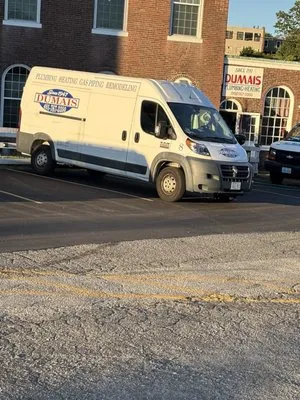
Dumais Plumbing & Heating is Lincoln, RI's trusted provider for comprehensive plumbing, heating, and HVAC solutions. Serving local homes and businesses, we understand the common challenges homeowners ...
R W Bruno Heating & Cooling is a trusted HVAC company serving Lincoln, RI, and surrounding areas. Specializing in heating and air conditioning services, they help homeowners and businesses maintain co...
NG&G Facilities Maintenance
NG&G Facilities Maintenance is your trusted local expert in Lincoln, RI, providing comprehensive electrical, lighting, security, and HVAC services. We understand the common local frustrations with the...
Q&A
Can my older steel ducts handle a high-efficiency air filter for ozone and pollen?
Galvanized steel ductwork from the 1960s often has smaller, restrictive trunk lines. Installing a MERV-13 filter for Lincoln's May pollen peak and summer ozone risk can create excessive static pressure, reducing airflow and straining the blower motor. A technician must perform a static pressure test before upgrading filtration; duct modification or a media cabinet may be necessary to achieve proper airflow and IAQ.
What does the new 15.2 SEER2 minimum mean for my Lincoln electric bill?
The 15.2 SEER2 mandate ensures new systems are significantly more efficient than older models common in Rhode Island. At Lincoln's current rate of $0.28 per kWh, upgrading from a 10-SEER unit to a 16-SEER2 model can cut cooling costs by roughly 35%. The active Inflation Reduction Act rebates, capped at $8,000, directly offset the higher upfront cost of these efficient units, improving the payback period.
My Ecobee thermostat is showing an E103 alert. What does this mean?
An Ecobee E103 alert specifically indicates the thermostat has lost communication with an external zoning panel or equipment interface module. In Lincoln homes, this is often caused by a loose low-voltage wire connection at the zone board, which can be disturbed by vibrations from the aging furnace blower. It requires a technician to trace the communication wire, check terminals, and verify the zone board is receiving 24V power.
My AC stopped working on a hot day in Fairlawn. How quickly can a technician arrive?
A technician can typically be dispatched from our service center near Lincoln Woods State Park within the hour. We route via I-295 for the most direct access to Fairlawn, ensuring a response time between 12 to 18 minutes for emergency no-cool calls. We prioritize these dispatches to restore cooling and prevent indoor humidity from rising rapidly.
What are the permit and safety rules for a new AC installation in Lincoln now?
All HVAC work in Lincoln requires a permit from the Town of Lincoln Building and Zoning Department. As of 2026, new systems using mildly flammable A2L refrigerants like R-454B must comply with updated safety standards, including leak detectors, revised clearance distances, and specific labeling. Your contractor must follow these protocols and provide the manual J load calculation and manual D duct design for permit approval.
Why does my air conditioner's drain line keep clogging in my Fairlawn home?
Your system is likely original to the 1968 average build date in Lincoln, making it over 50 years old. With age, galvanized steel ductwork develops internal rust and scale, which sheds particles into the airstream. These particles combine with Lincoln's humid air to form a thick, muddy sludge in the condensate pan and drain line, leading to frequent clogs and potential water damage.
Why does my AC struggle when it hits 95°F, even though it's rated for 88°F?
Air conditioners in Lincoln are sized for an ASHRAE design temperature of 88°F, which is the local 1% extreme. On days reaching 95°F, the system operates continuously, and its capacity drops. The new standard R-454B refrigerant maintains slightly better efficiency and capacity at these higher temperatures compared to older R-410A, but proper sizing and duct integrity are critical for performance during heat waves.
Does it make sense to switch from my natural gas furnace to a heat pump in Lincoln?
Given Lincoln's winter design low near 10°F and Rhode Island Energy's heat pump rebates of $1,000-$2,000, a cold-climate heat pump is a viable primary system. The key is managing the $0.28 per kWh rate during utility peak hours of 2 PM to 7 PM. A properly sized, modulating heat pump paired with your existing gas system as a low-cost backup for extreme cold often provides the optimal balance of comfort and operating cost.
