
Top Emergency HVAC Services in Boyd, TX, 76023 | Compare & Call

Mr Backflow is a licensed and insured plumbing and HVAC company serving Boyd, TX and the surrounding metroplex. Specializing in backflow testing and inspection services, including fire extinguishers, ...

Chill Factor A/C Heating and Refrigeration
Chill Factor A/C Heating and Refrigeration is a locally owned and operated HVAC company serving Boyd and the greater Dallas/Fort Worth area. Founded by Mike Manning, a veteran technician with over 30 ...

Boyd Air Conditioning Guys provides reliable heating and cooling solutions for homeowners throughout Boyd, TX, and the surrounding area. As local experts, they understand the common HVAC challenges fa...
Mr Backflow LLC dba 1-A Services
Mr Backflow LLC, operating as 1-A Services in Boyd, TX, is a family-owned business that has been reliably serving the DFW metroplex since 1998. Licensed in HVAC, plumbing, backflow testing and repairs...
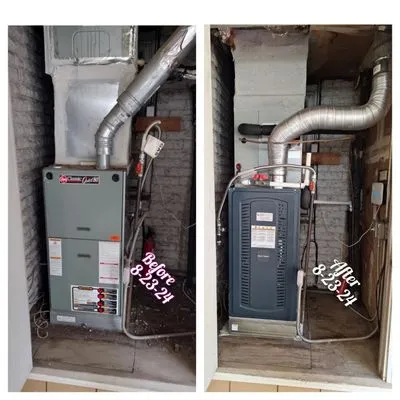
Nathaniel Bowen, owner of Bowen Arrow Heating & Air in Boyd, TX, has dedicated over 12 years to the HVAC trade, with 8 years of hands-on experience and launching his own family business in 2022. His a...
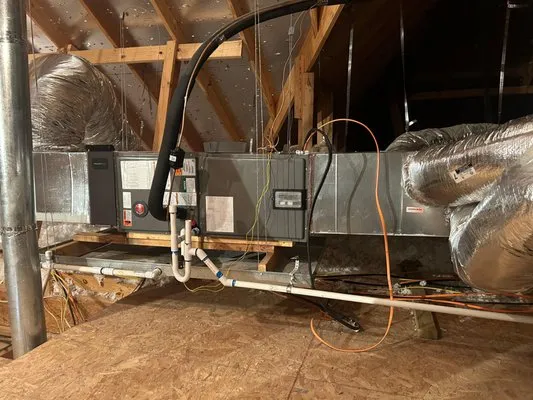
Air Remedy is Boyd, TX's trusted residential HVAC specialist, serving North Fort Worth homeowners with reliable heating and air conditioning solutions. We focus on keeping your home comfortable year-r...
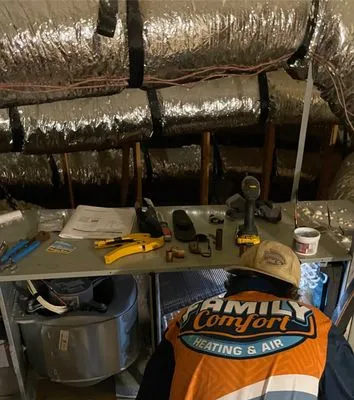
Family Comfort Heating & Air is your trusted local HVAC partner in Boyd, TX. We focus on providing dependable heating and cooling solutions for homes and businesses throughout our community. Our exper...
Frequently Asked Questions
Can my home's ductwork handle better air filters for our pollen and ozone issues?
Boyd's April pollen peak and summer ozone risk make advanced filtration valuable. Many homes here use flex duct with R-6 insulation, which has a higher inherent static pressure. Installing a standard 1-inch MERV-13 filter can often restrict airflow too much, causing the system to overheat and fail. A better solution is a 4- to 5-inch media cabinet, which provides superior particle and allergen capture without overworking the blower motor.
Why do air conditioning units in Boyd seem to fail more often as they get older?
The average home in Boyd was built around 1985, meaning original HVAC systems are now over 40 years old. This age aligns with the typical 15-20 year lifespan of major components. The primary failure point for these older systems is the capacitor, a part that stores and releases energy to start the compressor and fan motors. Boyd's design temp of 101°F creates extreme heat cycles that degrade capacitors faster, leading to a common 'no-cool' emergency.
Are the new 2026 air conditioner efficiency standards worth the investment in Boyd?
The federal minimum efficiency is now 14.3 SEER2, a significant jump from older units. While Boyd's electricity rate is about $0.14 per kWh, a modern high-SEER2 system can cut cooling costs by 30-50%. The Inflation Reduction Act's HEEHRA rebates, offering up to $8,000 for qualifying heat pump installations, dramatically improve the payback period. Combining this rebate with local Oncor utility incentives makes a high-efficiency upgrade a strong financial decision.
My Ecobee thermostat is showing an E144 alert. What does this mean for my system?
An Ecobee E144 code specifically indicates the thermostat has lost communication with an external equipment module, like a zoning panel or humidifier. In Boyd, this often points to a wiring issue exacerbated by heat in the attic or a failing control board. It's a diagnostic signal, not a primary failure, but it can prevent the system from responding to commands. A technician will trace the low-voltage wiring from the thermostat to the air handler to locate the fault.
What are the permit and safety requirements for a new AC installation in Boyd now?
All HVAC replacements in Boyd require a permit from the City of Boyd Building Inspections Department. As of 2026, new systems using A2L refrigerants like R-454B, which are mildly flammable, must follow updated safety standards (UL 60335-2-40). This mandates specific leak detectors, revised electrical codes, and proper labeling. Hiring a licensed contractor ensures the installation meets these codes for safe operation and validates eligibility for the federal tax credits and rebates.
What happens if my air conditioning stops working on a hot day in Boyd City Center?
A sudden loss of cooling requires a prompt diagnosis. For a resident near Boyd High School, a technician can typically dispatch from a service area near TX-114 and arrive at your home within 5 to 10 minutes. The first step is checking for simple issues like a tripped circuit breaker or a failed start capacitor, which is a frequent culprit. This quick response helps prevent secondary damage and restores comfort efficiently.
Should I consider switching from my gas furnace to a heat pump in Boyd?
Given Boyd's winter lows and the active federal rebates, a heat pump is a viable primary system. Modern cold-climate heat pumps operate efficiently in our region, and the Inflation Reduction Act rebate can cover a major portion of the cost. To maximize savings, pair the heat pump with a smart thermostat to avoid operation during Oncor's peak hours from 2:00 PM to 8:00 PM. This creates a hybrid or dual-fuel system that uses the most cost-effective energy source based on the outdoor temperature.
How well do new air conditioners handle our hottest summer days?
Boyd's design temperature for equipment is 101°F, but actual temperatures can exceed this. When outdoor temps surpass the design limit, even a properly sized system will run continuously to maintain a temperature gap, or delta T. The new standard refrigerant, R-454B, maintains better efficiency and capacity at these high ambient temperatures compared to older R-410A. Proper sizing via a Manual J load calculation is critical to ensure the unit can handle the peak load.
