
Top Emergency HVAC Services in Cactus, TX, 79013 | Compare & Call

There are 48 hvac companies server in Cactus TX
Founded in 1989 by Larry, who has been serving the Texas Panhandle since 1972, Larry's Heating & Air is built on decades of local experience. Larry started the company after managing another HVAC busi...
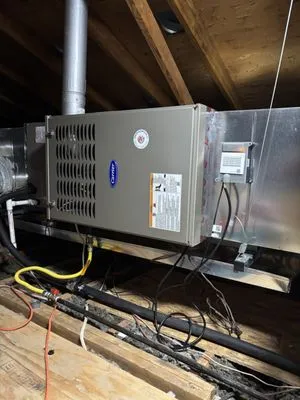
Morton Heating & Air has been serving Amarillo, TX, for over 25 years, specializing in heating, air conditioning, and refrigeration services. We focus on honest, straightforward solutions—no sales pit...

Tactical Heating & Air is a locally owned and operated HVAC contractor proudly serving Amarillo, TX, and the surrounding communities. As a small business, we understand the specific needs of our neigh...
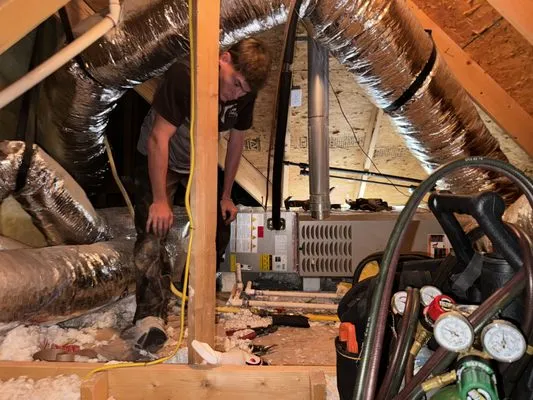
For over 18 years, I've dedicated myself to the HVAC trade, building a team at Adam's Air with a combined 40+ years of hands-on experience. We've completed thousands of hours of specialized training t...

Goliath Heating & Air Conditioning is your trusted, local HVAC expert serving Amarillo, TX. We specialize in professional HVAC installation, replacement, and repair services designed to withstand the ...
A&R Plumbing, Heating, & Air Conditioning
A&R Plumbing, Heating, & Air Conditioning is a locally owned and family-operated business serving Amarillo, TX. Established in the community, they provide reliable installation, repair, and maintenanc...

1-800-Plumber +Air and Electric
1-800-Plumber +Air and Electric in Amarillo, TX is a family-owned and operated business serving the Texas Panhandle since 1995. Founded by the Shreiner family, the company is led by Jasen, a second-ge...
Frank’s Repair Plumbing
Frank's Repair Plumbing is a family-owned plumbing, heating, air conditioning, and water heater company that has been serving Amarillo and the Texas Panhandle since 1953. With over 70 years of experie...

Founded in 1972, Scottco is a locally owned and operated provider of plumbing, HVAC, and electrical services for Amarillo and the Texas Panhandle. For over 50 years, our commitment to professionalism,...

Upchurch Heating and Air is a family-owned HVAC company serving Amarillo and the surrounding Panhandle area. Founded by brothers Gary and Steve Upchurch, who each bring over 45 years of experience, th...
Estimated HVAC Service Costs in Cactus, TX
Common Questions
My air conditioner stopped cooling on a hot afternoon in Cactus City Center. How fast can a technician arrive?
For a no-cool emergency, our technicians stationed near the Moore County Airport can typically be en route within minutes. Using US-287 provides direct access to the Cactus City Center neighborhood, ensuring a reliable 5-10 minute response window for urgent calls. We prioritize these dispatches to restore cooling and prevent further heat-related strain on your system’s components.
With our dust and April pollen, what's the best air filter for my home?
The semi-arid climate creates a persistent Particulate Matter risk, making filtration critical. A MERV-13 filter is highly effective for capturing fine dust and pollen. However, in systems using flexible insulated ducting, we must verify static pressure; a restrictive filter can overwhelm older blower motors. A professional can test your system’s airflow to confirm it can handle the higher filtration without reducing cooling capacity or damaging the equipment.
What are the permit and safety rules for a new AC installation in Cactus?
All new installations require a permit from the City of Cactus Building Inspections Department. As of 2026, this includes compliance with updated safety standards for A2L refrigerants like R-454B, which are mildly flammable. These codes mandate specific leak detection, equipment labeling, and installation practices in utility closets or attics. A licensed contractor will handle this permitting process to ensure the system meets all current mechanical and electrical codes for your safety.
Why does my AC struggle when it gets above 97 degrees?
Your system is engineered for a 97°F design temperature, which is the outdoor condition it is sized to maintain a 20-degree indoor differential. On days that exceed this, which are common here, the system must run continuously and may not keep up. Modern units using R-454B refrigerant are formulated to maintain better pressure and efficiency in these extreme temperatures compared to older R-410A systems, but all equipment has a performance limit.
My AC unit is original to my Cactus home. How much longer should it last?
A system from the 1991 average build year is now 35 years old, which is well beyond its typical service life. Units of this age in Cactus are particularly prone to capacitor failure due to the cumulative stress of thousands of hours of extreme heat. The electrical components degrade faster than the compressor itself. We often see these older units requiring major repairs or replacement as their efficiency and reliability have significantly diminished.
What does the new 14.3 SEER2 minimum efficiency standard mean for my replacement in 2026?
The 14.3 SEER2 minimum is a federal baseline for new installations, reflecting improved testing for real-world performance. For Cactus homes, selecting a unit with a higher SEER2 rating, like 16 or 18, can significantly offset the local 0.11/kWh utility rate. The active Inflation Reduction Act rebates, with an $8,000 cap, can directly reduce the upfront cost of these more efficient models, improving the payback period.
My Ecobee thermostat just showed an 'E160' alert. What does that mean?
The Ecobee E160 code specifically indicates a communication loss with the outdoor condenser unit. In Cactus, this alert often points to a failure triggered by extreme heat, such as a compromised capacitor, a tripped high-pressure switch, or a damaged low-voltage wire. It’s a diagnostic signal that the system has shut down to prevent damage, and it requires a technician to inspect the outdoor unit’s electrical components and refrigerant pressures.
I use natural gas heat now. Should I consider a heat pump in Cactus?
A modern cold-climate heat pump is a viable option for Cactus, given our winter lows typically stay within its effective operating range. The economic analysis involves comparing natural gas costs to electricity at 0.11/kWh, especially during the 14:00-19:00 utility peak hours. The key advantage is consolidating heating and cooling into one high-efficiency system, often eligible for significant IRA rebates, though the existing gas furnace can be retained as a backup for the coldest hours.
