
Top Emergency HVAC Services in Livingston, TX, 77351 | Compare & Call

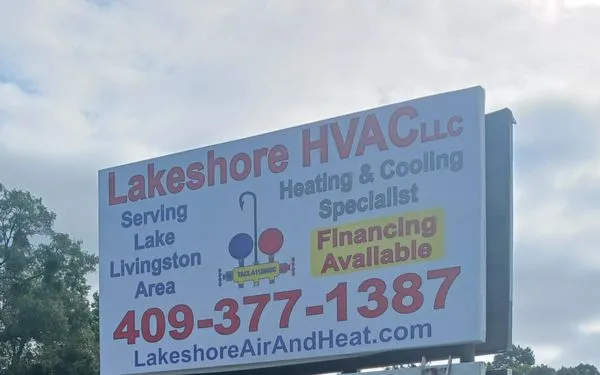
Lakeshore HVAC LLC is a trusted heating and air conditioning service provider serving the Livingston, TX, community. We focus on reliable HVAC installation, repair, and maintenance to ensure your home...

Smith Quality Air & Heating
Since 1993, Smith Quality Air & Heating has been the trusted local HVAC partner for homeowners in Livingston and the surrounding Liberty, Montgomery, and San Jacinto county areas. Founded by Will and ...
Best Air Conditioning and Heating
Best Air Conditioning and Heating L.L.C. is a family-owned HVAC company that has been providing reliable service to the Greater Lake Livingston area since 1983. As a licensed and bonded Bryant Factory...
For over 50 years, Jimco Air-Conditioning & Heating has been the trusted name for climate control in Polk County and the Livingston area. We are a one-stop shop for both residential and commercial cli...
Rejoyce Services is a trusted, local HVAC provider proudly serving Livingston, TX, and the surrounding areas. With over 15 years of hands-on experience, we specialize in keeping homes and small busine...
McWilliams Heating, Cooling and Plumbing
McWilliams Heating, Cooling and Plumbing has been a trusted name in Texas since 1974, providing reliable home services to the Livingston community. As a family-owned and operated business, we speciali...
Lewis Air Conditioning & Heating
Lewis Air Conditioning & Heating is Livingston's trusted local HVAC specialist, dedicated to keeping homes comfortable year-round. We understand the unique challenges faced by Livingston homeowners, e...
Amburn A/C & Heating is a trusted HVAC company serving Livingston, TX, and the surrounding areas. We specialize in diagnosing and resolving common local heating and cooling problems, such as uneven co...
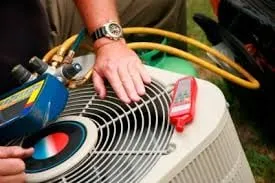
All Pro Air Solutions is Livingston's trusted HVAC expert, dedicated to keeping local homes comfortable year-round. We understand the common frustrations Livingston homeowners face, such as weak airfl...
Parker A/C & Heating is a trusted, locally-owned HVAC company serving Livingston, TX, and the surrounding communities. We understand the unique challenges Livingston homeowners face, especially the st...
Question Answers
Can my home's existing ducts handle better air filters for our pollen and ozone?
Your existing fiberboard and flex duct system may have restrictive static pressure. While a MERV-13 filter is ideal for capturing April pollen peaks and mitigating ozone-risk particulates, it can overwhelm an older blower motor if the ductwork is already compromised. A technician should perform a static pressure test before upgrading filtration; often, sealing leaky ducts is a prerequisite to safely using higher-MERV filters without sacrificing airflow or equipment life.
My Ecobee thermostat is showing an E164 alert. What does this mean for my system?
An Ecobee E164 alert specifically indicates a loss of communication with the outdoor unit. In Livingston's climate, this often points to a safety lockout due to high pressure from a dirty condenser coil or a failing capacitor, preventing the system from starting. It can also signal refrigerant circuit issues. This proactive alert allows for service before a complete failure, which is critical during our humid summers to prevent mold growth and discomfort.
My AC went out on a hot day near the Polk County Courthouse. How quickly can a tech arrive?
A technician can typically be dispatched from our shop to your location in Downtown Livingston within 5-10 minutes. Our proximity to the US-59 corridor allows for direct routing to neighborhoods off the highway, avoiding longer travel from out-of-town contractors. For a no-cool emergency, we prioritize same-day service to prevent indoor humidity and heat from damaging furnishings or affecting comfort.
Why is my 1970s Livingston home's AC system struggling in 2026?
Livingston homes built around 1974 have HVAC systems that are over 50 years old when you account for average component life. In this humid climate, fiberboard ductwork deteriorates, losing its air-sealing integrity and introducing moisture into the system. This constant exposure to humidity, combined with acidic condensate, accelerates micro-channel coil corrosion, a common failure point for aging systems. Reaching this age often means multiple expensive repairs are less cost-effective than a planned replacement.
What are the permit and safety requirements for a new AC installation in 2026?
All replacements in Livingston require a permit from the City of Livingston Building Inspections Department, ensuring electrical and refrigerant code compliance. As of 2026, new systems predominantly use A2L refrigerants like R-454B, which are mildly flammable. Installations must follow updated safety standards, including specific leak detection and room volume calculations. Using a licensed contractor ensures these protocols are met for both your safety and to validate eligibility for rebates.
Is it worth upgrading my old AC to meet the new 2026 efficiency standards?
Upgrading to a system that meets the current 14.3 SEER2 minimum is a sound investment. At Livingston's average electric rate of $0.14 per kWh, a modern system can cut cooling costs significantly compared to a unit from the 1990s or earlier. The active Inflation Reduction Act rebates, with a cap of $8,000 for qualified heat pumps, directly offset the higher upfront cost of high-efficiency equipment, improving the payback period.
Should I consider switching from my electric furnace to a heat pump?
Given Livingston's mild winters and your primary electric heat, a heat pump is a highly efficient alternative. It provides both cooling and heating, using far less electricity than resistance heat strips during the winter low temperatures common here. To maximize savings, pair it with a thermostat programmed to avoid the utility peak hours of 2 PM to 8 PM. The current federal rebates make this transition to a single, high-efficiency system particularly cost-effective.
Why does my AC seem to run constantly on our hottest days?
Livingston's design temperature for HVAC systems is 96°F, a benchmark based on historical weather data. On days that meet or exceed this temperature, your system will run nearly continuously to maintain setpoint—this is normal operation at design conditions. Modern systems using R-454B refrigerant are engineered to maintain capacity and efficiency better in this extreme heat compared to older R-22 units, which would struggle significantly and likely fail.
