
Top Emergency HVAC Services in Midway, UT, 84049 | Compare & Call


Ostmann's Heating & Air is a locally owned and operated HVAC contractor proudly serving the Midway community and surrounding areas since 2018. As a dedicated neighbor in Wasatch County, we understand ...
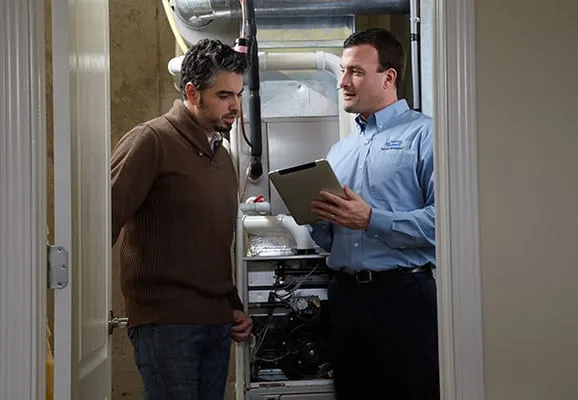
Heber Valley Mechanical is a trusted HVAC company serving Midway, Heber City, and Park City, Utah, with over twelve years of experience. Owned and operated by a certified commercial and residential HV...
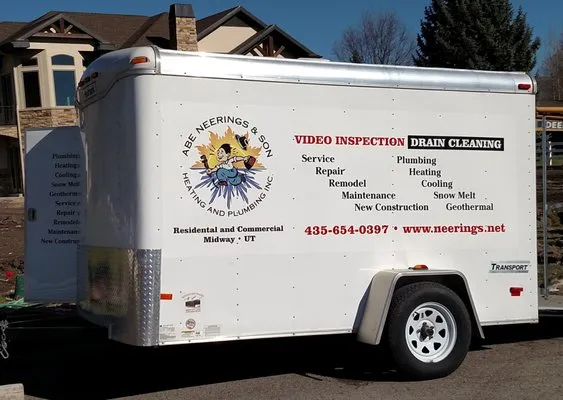
Abe Neerings & Son Heating and Plumbing
Abe Neerings & Son Heating and Plumbing is a family-owned business with deep roots in the Heber Valley, serving Wasatch and Summit Counties since 1960. Founded by Pieter Neerings during the Great Depr...
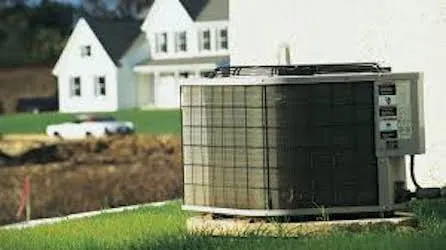
Wright Heating & Air Conditioning has been the trusted name for reliable heating and cooling solutions in Midway and the surrounding Wasatch and Summit counties since 1989. For over 30 years, our fami...
Frequently Asked Questions
Should I consider switching from my gas furnace to a heat pump in Midway?
A cold-climate heat pump is a viable primary heating source for Midway, given our winter lows. The technology efficiently extracts heat from outdoor air even in freezing temperatures. Pairing it with your existing gas furnace as a backup during the coldest hours or utility peak periods from 2 PM to 8 PM can optimize cost and comfort. The high federal rebates for heat pumps make this a strategic time to evaluate a hybrid system, reducing reliance on a single fuel source.
How old is the average HVAC system in Midway homes, and what problems does that age create?
The average Midway home was built in 2002, making the original HVAC system about 24 years old in 2026. Units this old are well past their typical service life, leading to chronic refrigerant leaks and reduced efficiency. In our arid climate with sharp temperature swings, a common failure is frozen evaporator coils. This happens when small leaks lower refrigerant charge, causing the coil temperature to drop below freezing and ice over the entire assembly.
Why does my air conditioner struggle when the temperature goes above 89 degrees?
Standard HVAC systems in Midway are designed to maintain indoor comfort up to an outdoor temperature of 89°F, known as the design temperature. On days that exceed this, which is common during summer highs, the system must run continuously and may not keep up. Modern units using the new R-454B refrigerant have slightly better high-temperature performance than older refrigerants, but proper sizing through a Manual J load calculation remains critical to handle these peak loads effectively.
What's the fastest way to get emergency HVAC service in Midway Town Center on a hot day?
If your air conditioning fails during a heatwave, a local technician can typically reach your home within 5 to 10 minutes. Dispatch from a service vehicle near Midway Town Square or along US-113 allows for rapid response to the Town Center area. For a true 'no-cool' emergency, the immediate steps are to turn the thermostat to 'off,' shut off the breaker to the outdoor unit, and check if the air filter is clean to prevent further damage before help arrives.
What are the permit and safety requirements for a new AC installation in Midway now?
All HVAC replacements in Midway require a permit from the Midway City Building Department. Since January 2023, new residential systems must use lower-GWP A2L refrigerants like R-454B, which are mildly flammable. This mandates 2026 code-compliant installations, including updated equipment labels, leak detection systems, and technician certification. These protocols ensure safe handling and are non-negotiable for both rebate qualification and proper system operation.
Can my home's ductwork handle a high-efficiency air filter for wildfire smoke and spring pollen?
Most Midway homes built around 2002 use galvanized sheet metal ducts with external fiberglass wrap, which is a robust and sealed system. This ductwork can generally support a MERV-13 filter, the recommended rating for capturing PM2.5 from wildfires and pollen peaks in May, without causing excessive static pressure. However, installing a new 4-inch media cabinet is the best practice, as it provides superior filtration with less airflow restriction than a standard 1-inch filter slot.
My Ecobee thermostat is showing an E1 alert. What does this mean for my Midway home?
An Ecobee E1 alert indicates the thermostat has lost communication with your HVAC equipment. In Midway, this is often caused by a safety lockout on the furnace control board due to a recurring fault, such as a failing flame sensor on your gas system. It can also signal a complete system shutdown from a frozen evaporator coil. This alert allows for proactive diagnosis before a total failure occurs, especially valuable during periods of extreme temperature swings that stress older components.
What are the 2026 efficiency standards for Midway, and do rebates make an upgrade worthwhile?
Federal minimum efficiency is now 13.4 SEER2 for air conditioners and heat pumps. Upgrading a 24-year-old system to a modern 16+ SEER2 unit can cut cooling electricity use by 30% or more. With Midway's average rate of $0.118 per kWh, this represents significant annual savings. The active Inflation Reduction Act HEEHRA rebates, capped at $8,000 for qualified homeowners, combined with up to $1,000 from Rocky Mountain Power's Wattsmart program, can offset a major portion of the investment.
