
Top Emergency HVAC Services in Pullman, WA, 99163 | Compare & Call

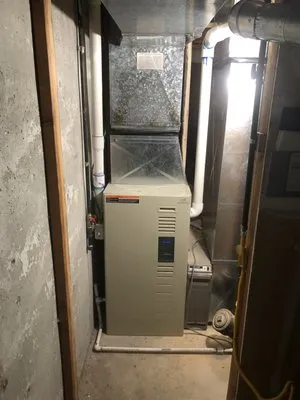
Unlimited Heating
Unlimited Heating is a trusted, full-service HVAC, plumbing, and appliance repair company serving Pullman, WA, and the surrounding Palouse region. We understand the unique challenges local homeowners ...

Pullman Heating & Electric is a locally owned and operated family business serving the Palouse region since 1950. Founded by Jon and Cheryl Clancy, the company has grown from a one-person operation in...

Hilliard's Heating & Plumbing
Since 1968, Hilliard's Heating & Plumbing has been the trusted local name for reliable HVAC and plumbing services in Pullman, Moscow, and surrounding areas. We provide comprehensive sales, installatio...
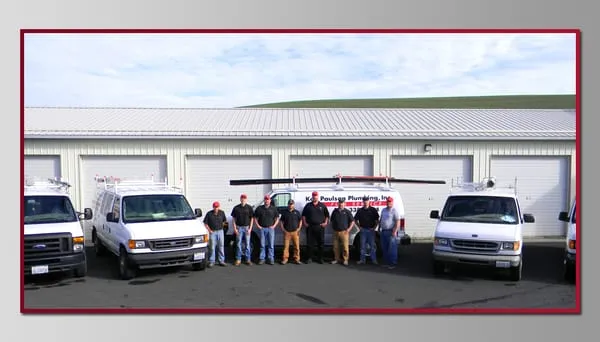
Ken Paulson Plumbing
Founded in 2001 by Ken Paulson, this Pullman plumbing company began as a one-person operation run from a home. Over two decades of dedicated service to the Palouse, it has grown into a trusted team of...
Gormsen Plumbing & Heating is your trusted local partner for plumbing and HVAC services in Pullman, WA. Many homes in our area face common heating and cooling challenges, from dirty air filters that s...
Questions and Answers
With wildfire smoke and spring pollen, can our home's existing ducts handle a better air filter?
Effective filtration for PM2.5 from wildfires and May pollen peaks requires a minimum of a MERV-13 filter. Your home's original galvanized sheet metal ductwork is generally robust, but adding a high-MERV filter creates increased static pressure that an older blower may not overcome. A technician must measure the system's static pressure and assess the blower's capability. Often, sealing leaky duct joints and ensuring the return air grille is sufficiently large are necessary steps to allow for upgraded filtration without reducing airflow or causing the coil to freeze.
Pullman summers can hit the mid-90s. Is our AC designed for that, and do the new refrigerants work as well?
Pullman's HVAC systems are typically designed for a 89°F outdoor temperature, per Manual J load calculations. Occasional peaks into the mid-90s mean the system will run continuously to maintain setpoint, which is normal but stresses older units. The new industry-standard R-454B refrigerant has thermodynamic properties well-suited for this climate, offering efficiency and capacity very close to the older R-410A it replaces. Its slightly higher pressure and lower global warming potential make it a reliable choice for handling our summer heat waves within the system's design limits.
We heat with natural gas. Does it make sense to switch to a heat pump in Pullman's climate?
A modern cold-climate heat pump is a viable primary heat source for Pullman, where winter lows typically hover in the 20s. The economics depend on natural gas versus electricity costs and the $8,000 federal rebate for qualified heat pump installations. To maximize savings, program the thermostat to avoid supplemental electric resistance heat during Avista's peak rate periods from 7-9 AM and 5-9 PM. The system will efficiently handle the bulk of heating, with the existing gas furnace potentially serving as a cost-effective backup during the coldest hours if it is in good condition.
What should we know about permits and safety for a new AC installation with the new refrigerant?
All HVAC replacements in Pullman require a permit from the City of Pullman Building Division. This ensures the installation meets current Washington State energy and mechanical codes. Critically, as of 2026, systems using mildly flammable A2L refrigerants like R-454B must adhere to updated safety standards (UL 60335-2-40). These mandate specific leak detectors, revised service port placements, and updated labeling. Hiring a contractor familiar with these 2026 protocols is essential for a safe, legal, and code-compliant installation that will pass city inspection.
Our system is original to our 1986 home. Is it just old, or is there a specific reason it keeps freezing up?
A 40-year-old system is well beyond its expected service life. In Pullman, the primary failure point for units of this age is a frozen evaporator coil caused by chronically low airflow. Decades of dust and pollen accumulation in the galvanized sheet metal ductwork, combined with degrading blower motors and worn-out capacitors, restrict airflow across the coil. This causes refrigerant temperatures to drop below freezing, forming ice that blocks airflow entirely and shuts down cooling.
I see new units have a SEER2 rating. What does the 13.4 minimum mean for my bill, and are there rebates?
The SEER2 standard measures seasonal energy efficiency under more realistic conditions than the old SEER. A 13.4 SEER2 unit is the federal minimum for 2026, but modern systems easily achieve 16 to 18 SEER2. Upgrading from a vintage 8 SEER unit to an 18 SEER2 model can cut cooling electricity use by over 50%. With Pullman's residential rate at $0.098 per kWh, the annual savings are significant. The federal Inflation Reduction Act (HEEHRA) provides rebates up to $8,000, and Avista offers additional incentives of $300 to $1,500, making high-efficiency replacements cost-effective.
Our Ecobee thermostat is showing an 'E1' alert. What does this mean for our system right now?
An Ecobee E1 alert indicates the thermostat has lost communication with the HVAC equipment. In Pullman, this is commonly caused by a safety lockout on the equipment itself, often due to a flame sensor issue on the furnace or a high-pressure switch trip on the AC. The thermostat is telling you it cannot call for heat or cool because the unit is in a fault state. This requires a technician to reset the lockout and diagnose the root cause, which could be a dirty sensor, a failing inducer motor, or—in cooling mode—the low airflow that leads to frozen coils.
Our AC just quit on a hot afternoon here on College Hill. Is this a real emergency, and how fast can someone get here?
A complete 'No-Cool' failure during peak heat qualifies for emergency dispatch. Our service team stationed near Washington State University can route directly via US-195 to reach most College Hill homes within 5 to 10 minutes. The priority is to secure the system, diagnose the cause—often a tripped breaker, failed capacitor, or the aforementioned frozen coil—and implement a temporary restoration to protect the compressor from damage while we plan the proper repair.
