
Top Emergency HVAC Services in Menasha, WI, 54952 | Compare & Call

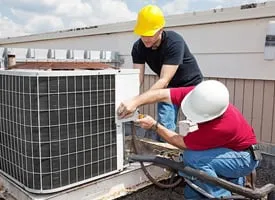
Founded in 1977, Palisades Heating & Cooling is a Menasha-based, owner-operated HVAC company serving the Fox Cities. With over 35 years of experience, owner Joe takes a hands-on approach, personally v...

For over three decades, Abby's Heating & Cooling has been the trusted, family-owned HVAC contractor for residents in Menasha and the wider Fox Cities area. We built our reputation on honest, straightf...
Common Questions
My Ecobee thermostat is showing an 'E1' alert. What does this mean for my Menasha home?
An Ecobee 'E1' code signals the thermostat has lost communication with your HVAC equipment, often due to a power interruption at the air handler or furnace. In a Menasha home, this is frequently caused by a tripped float switch from a clogged condensate drain—a common issue in our humid climate—or a failing control board. Check the indoor unit's power switch and circuit breaker first. If power is present, the issue likely requires a technician to inspect the low-voltage wiring and safety switches.
Is it practical to switch from my reliable gas furnace to a heat pump given our cold winters?
Modern cold-climate heat pumps are designed to operate efficiently in sub-zero temperatures common to Menasha. The economics depend on your gas versus electricity rates and the $8,000 HEEHRA rebate. For optimal savings, pair the heat pump with your existing gas furnace as a dual-fuel system. The furnace provides backup heat during extreme cold or during the 1-7 PM utility peak hours when electricity rates are highest, ensuring comfort and cost control.
Can my home's older galvanized steel ductwork handle high-grade air filters for pollen and ozone?
Galvanized steel ductwork is structurally sound but often has undersized returns and numerous sharp bends from older construction practices. Installing a high-MERV filter, like a MERV-13 for capturing May pollen peaks, can create excessive static pressure in these restrictive systems. This forces the blower motor to work harder, increasing energy use and potentially causing airflow issues. A static pressure test is advised before upgrading filtration.
If Menasha can hit the 90s, why is my system only designed for 85°F?
The 85°F design temperature is an engineering standard based on local climate data, representing a temperature the system should maintain comfortably for 97-98% of summer hours. Peak temperatures above this, like our occasional 90°F+ days, will cause the system to run continuously to meet the load. Modern systems using R-454B refrigerant maintain better capacity and efficiency at these higher temperatures compared to older refrigerants, but may still see a slight reduction in total cooling output.
What are the legal and safety requirements for installing a new R-454B system in Menasha?
All HVAC installations in Menasha require a permit from the City of Menasha Building Inspection Department. As of 2026, systems using A2L refrigerants like R-454B, which are mildly flammable, must follow strict new UL 60335-2-40 safety standards. This mandates specific leak detectors, revised clearance distances, updated service procedures, and specialized technician certification. Proper permitting ensures the installation is inspected for these critical safety protocols and local building code compliance.
What should I do if my air conditioning fails during a hot spell here in Downtown Menasha?
First, check the circuit breaker and thermostat settings. If the system is unresponsive, a local technician can typically reach you within 10-15 minutes. A service van coming from the Jefferson Park area can access Downtown via I-41 very efficiently. This rapid response is critical to prevent secondary damage like ice melt flooding or compressor failure from short-cycling.
Why are so many HVAC units in Menasha from the 1970s developing issues like evaporator coil icing?
The average home age in Menasha is over 50 years, meaning original systems are operating well past their 15-20 year design life. On older units, refrigerant levels naturally decline, leading to a low charge. This causes the evaporator coil temperature to drop below freezing, pulling moisture from our humid continental air which then forms ice. The R-22 refrigerant these systems used is also obsolete, making proper servicing difficult and expensive.
What does the new 13.4 SEER2 minimum efficiency standard mean for my utility bills?
As of 2026, all new central air conditioners must meet a 13.4 SEER2 rating, a measurable upgrade from older 10-12 SEER units. At Wisconsin's average rate of $0.14 per kWh, a modern 2.5-ton system can reduce cooling costs by 20-30%. The federal HEEHRA rebate, capped at $8,000 for qualified heat pump installations, directly offsets the higher upfront cost of these efficient units, improving the payback period.
